After visiting 42 countries, I’ve learned a thing or two about what makes a place special and how to experience it meaningfully. These practical guides share the kind of specific, tested advice I wish I’d had when I was starting out—from navigating Indian railways to finding the best breakfast spots in small New Zealand towns.
Oaxaca city is full of wonderful markets bursting with amazing produce. Many of them are unassuming, tucked away through a doorway, down an alleyway, or around the corner. Access to fresh & delicious produce is one of my absolute favourite things about living in Mexico.
Before you go: produce markets in Oaxaca
I’m yet to find a mercado that’s disappointed me, they all have excellent produce for sale. I’d recommend visiting a few different ones to get a feel for it, but ultimately the one closest to where you are living or staying is probably going to be the best choice.
This is far from a comprehensive guide! But a couple of my favourite mercados (markets) in Oaxaca Centro are:
Mercado Sánchez Pascuas
Mercado Organico la Cosecha
Mercado de la Merced
Mercado de abastos
Mercado Centenario
At the market: buying your produce
Once you’ve decided which vendor to shop from, the next step is choosing what to buy. They will have a stack of some kind of basket or plastic tub for you to take one, and fill it with the fruits and vegetables you want.
Now is the fun part – choosing what you want to buy from the many piles of gorgeous looking fruits and vegetables. I always come home with so much more than I planned, because all of the wonderful produce is so tempting! So get to work, filling up your basket.
Sometimes, certain things like fresh herbs will be behind the counter. So if you don’t see what you want right away, don’t be afraid to ask!
One your basket is full, hand it to them and they will weigh up, count, and work out the price for you. If you struggle with Spanish, they will almost always have a pen and paper or a calculator to write the total down for you as well.
At the market: some useful words & phrases in Spanish
Although you may come across vendors who speak some English, a large majority of them will not. And besides, your visiting one of the most beautiful and traditional parts of Mexico – so using one of the local languages is not only part of the experience, but it’s part of being a considerate guest!
Estoy buscando / I’m looking for
¿Tienes …? / Do you have … ?
Necesito una bolsa / I need a bag
No necesito bolsa / I don’t need a bag
¿Cuánto cuesta? / How much is this?
¿Cuánto va a ser? / How much will it be?
¿Aceptan tarjetas de crédito o débito? / Do you take credit or debit cards?
¿Tiene cambio de un billete grande? / Do you have change for a large bill?
¡Muchas gracias! / Thanks very much!
aguacate / avocado
tomate / tomato
cebolla / onion
tomatillo / tomatillo
plátano / banana
manzana / apple
frambuesa / rasberry
mora / blackberry
arándano / blueberry
fresa / strawberry
papa / potato
toronja / grapefruit
naranja / orange
limón / lime
champiñón / mushroom
zanahoria / carrot
ejote / green beans
mango / mango
guayaba / guava
piña / pineapple
carambolo / starfruit
lechuga / lettuce
espinacas / spinach
pepino / cucumber
rábano/ radish
At the market: what does produce cost in Oaxaca?
The pricing for produce here is quite different from the USA, New Zealand, or Canada; for example. I love arriving into Mexico and enjoying the abundance of fresh, seasonal, and locally grown produce. But what does it cost? Here’s a breakdown of my most recent produce trip to the mercado:
Total price: $269mxn (at the time of writing in 2022 this is $12.79USD)
Once you get home: preparing your produce
Many of the things that make produce in Oaxaca so darn wonderful also make it a little problematic to eat right out of the bag. This is not a situation unique to Oaxaca, and is something you will encounter right across Mexico.
Everything is grown locally, often organically, and fertilised here in the Oaxaca valley with cow manure. Once it arrives at the mercado, as well as during the journey, it’s often sitting on the ground, in the dust, or on dirty truck beds and mercado floors. The dirt and bacteria that produce collects can make many people sick, so it’s important to prepare your produce properly – like locals & restaurants all do.
How to prepare fresh produce from the market in Mexico. This is done right when you get home from the mercado, before putting them away into the fridge and cupboards! It can take a little time, but it’s worth it to know all of your fruits, vegetables & salads are safe to eat right off the shelf.
Trim & shake
Shake off any visible dirt, and trim off things like roots, old leaves, and any parts of the fruit or vegetable which look undesirable/bad. It’ll go a long way to cleaning them if the dirt is already off!
Rinse them off
Take your produce and give them a rinse off in some water to get any loose dirt and particals off, it doesn’t need to be purified water at this point – under the tap is just fine
Soak & Sanitise
You can buy microdyn from just about any supermarket, and many mini-marts and oxxos. It’s a disinfecting liquid, and you add a few drops to a bowl of water, then put in your produce to soak. I tend to leave things up to 15 minutes – especially those which collect a lot of dirt and don’t have a peel or skin, such as lettuces and fresh herbs.
Some fruits in particular such as rasberries and strawberries can become waterlogged, so in those cases I soak them a bit less and/or use a separate citrus seed oil spray on them.
Drain & dry
Once they are finished soaking, leave them to dry. I like using a drying rack, or a colander. The most important thing is to place them somewhere clean, and not right back on the surface you were preparing the pre-soaked produce on.
Into the fridge and onto the shelves!
Now, place your produce however you like to store them. It doesn’t matter how, the main thing here is that you don’t put them back into the bags or containers they arrived in unless the containers have also been thoroughly washed & sanitised. Otherwise you will just be undoing all your hard work!
Towards the end of 2021 I moved to Puerto Vallarta for four months. It was far from my first time in Mexico, but It was my first time in this city as well as the state of Jalisco. When I move someplace new, one of the first things I want to know is an overview of the different neighbourhoods. The various barrios, or Puerto Vallarta neighbourhoods, have distinctly different vibes. So I got together with a few other bloggers who know Puerto Vallarta well to create a guide to the different areas most commonly inhabited by tourists and expats.
Puerto Vallarta is a city in the state of Jalisco. It’s on the Pacific Coast of Mexico, just below the Baja region, not too far south of Mazatlan and straddling the state of Nayarit. It’s picturesque – where the ocean meets lush green jungles & the Sierra Madre mountain range. It’s an excellent place to see whales, enjoy the ocean, and taste some typical Jalisco food.
There are of course, many many more barrios than those mentioned here! These are just the ones you are most likely to encounter when checking out hotels, airbnb, or rentals geared towards foreign expats. If you know Puerto Vallarta well, and would like to contribute a neighbourhood to this guide that’s not already covered, let me know! I’d be happy to include you.
Puerto Vallarta is a bit of everything – tourist mecca meets traditional Jalisco life,
Centro
Recommended by Vicky of Buddy The Traveling Monkey
One of our favorite neighborhoods in Puerto Vallarta is the “Centro” neighborhood. It’s nestled between the “5 De Diciembre” neighborhood and the “Zona Romantica” neighborhood. Centro has a very high-energy vibe. It’s perfect for those wanting to experience Puerto Vallarta’s lively and bustling scene.
In Centro, you will find Puerto Vallarta’s malecon, a stone boardwalk that is approximately one-mile long. There are always people walking, jogging, or biking on the malecon. There are usually food and craft vendors too. It’s a great place to people watch! A lot of the free things to do in Puerto Vallarta can be found in Centro as well. The Church of Our Lady of Guadalupe is an iconic landmark and free to enter. You can also visit the ChocoMuseo. This free museum tells all about the history of chocolate. Centro also has a lot of great restaurants and bars. If you love seafood, definitely head to Restaurant El Malecón. It’s on the beach and a great place to watch the sunset.
Zona Romantica (aka Romantic Zone or Old Town)
Recommended by Sarah from Live Dream Discover
The Romantic Zone is aptly named as it is the heartbeat of Puerto Vallarta. Here the narrow cobblestone streets are alive with tourists, ex-pats and locals enjoying the many restaurants, bars and shops in the neighborhood. It’s safe to say that every visitor to Puerto Vallarta will spend time here. This is also the home of Los Muertos beach, the most popular beach in Puerto Vallarta. Of course, this means it’s not the most peaceful beach in PV. But if you enjoy a lively atmosphere created by people of all ages along with watersports, beach activities, vendors and beachside bars you’ll love Playa Los Muertos.
A walk on the iconic pier is another must on this beach. By day, top things to do in Zona Romantica include lunch on Olas Atlas (Café Street), shopping at Olas Atlas Farmer’s Market and Isla Río Cuale Flea Market and of course enjoying the beach. After dark, the neighborhood becomes even livelier with the sound of music and people enjoying the many bars, clubs and entertainment venues.
The Romantic Zone is very gay-friendly with several bars catering to the LGBTQ community who love Puerto Vallarta. For a lower-key evening there’s great live entertainment at Act II Theatre and Incanto. Accommodations in Zona Romantica tend to be small boutique hotels, vacation condos and guest houses. This is not the place to stay if you want large luxury, all-inclusive resorts. There are also quite a few residences here housing ex-pats and locals.
Gringo Gulch
At first glance, the name of this Puerto Vallarta neighbourhood catches people off guard! But despite how it might seem, Gringo Gulch was a name given to the area by the Gringos themselves, and is not considered anything negative. The barrio is made up of a little stretch of houses just up the hill from Centro, running along the Rio Cuale.
Here you will find some more traditional housing dotted amongst some incredibly luxurious villas. This is where Elizabeth Taylor and Richard Burton had their house Casa Kimberly; which is now a fancy hotel & restaurant you can visit.
Gringo Gulch is beautiful, a little hilly, but with excellent views and close proximity to lots of restaurants and all the action of Centro Vallarta & Zona Romantica.
There are not many restaurants here, just housing and holiday villas. The main dining attraction here is the Iguana Bar at Casa Kimberly, this former house of Elizabeth Taylor and Richard Burton offers fine dining, stunning views, crystal chandeliers, and a top-notch tequila bar.
Gringo Gulch is a beautiful neighbourhood to stroll around, a haven of cobblestone roads, tiny staircases winding up the hill and blossoming bougainvillea. From here, you can easily get down to the beach in just a few blocks; walk over to Cerro and up to the Mirador el Cerro de la Cruz from here for amazing sunset views; or down the Puente Iguana stairs to the Rio Cuale Island, and across to Zona Romantica for plenty of restaurants, bars, and things to do.
El Cerro
El Cerro means ‘The Hill’ in Spanish, and it’s a fair descriptor for this Puerto Vallarta neighbourhood! Cerro is just up in the hill behind Centro next to Gringo Gulch, and is part of Puerto Vallarta’s original old downtown. Despite being a quick and simple walk down to Centro, it feels like stepping into a small town. The bustle fades away, and is replaced with roosters cawing and the sound of kids playing in the street.
Cerro is where we rented for 3 of the months whilst we were based in Puerto Vallarta and I’d recommend it for the old-town Mexico vibes, incredible views, and the convenient location. Most of the restaurants around here are technically down in Centro, but there are some amazing finds up here if you know where to look. Restaurant & Bar El Panorama, the famously extravagant Café des Artistes, and Restaurante Barcelona are all excellent restaurants in the area.
Cinco de Decembre
Introduced by Bailey from Destinationless Travel
One of the best neighborhoods in Puerto Vallarta is 5 de Diciembre (or 5th of December.) This area is the perfect place to base yourself in Puerto Vallarta thanks to its central location and stunning beach. 5 de Deciembre is located just north of Centro and the Malecon in Puerto Vallarta. This location means that you are still within a vibrant and safe area with easy access to some of the best attractions Puerto Vallarta. You can walk to the Malecon in only a few minutes, which is one of the busiest tourist areas in the city. But 5 de Deciembre is also a lot calmer than other neighborhoods in Puerto Vallarta like Centro or Zona Romantica.
There are fewer people around and the beach, Playa Camarones, is always much more peaceful with fewer crowds and vendors. In fact, Playa Camarones is a favorite beach in Puerto Vallarta with both tourists and locals. It is clean and beautiful with epic sunsets. Some of the best restaurants in Puerto Vallarta are located in this area too. For a fancier seafood meal, you cannot miss El Barracuda. Located right on the beach this place has the best location. But besides that, the food is very tasty with a variety of creative seafood dishes to choose from made with locally sourced ingredients.
El Remence / Las Canoas / Buenos Aires / El Caloso / Las Penas
Tucked away in the hillside behind Emiliano Zapato, you’ll find a cluster of small Puerto Vallarta neighbourhoods which on first sight, feel much less touristed than their nearby counterparts. These small barrios share a similar vibe which is much more laid back. They are still popular with expats and tourists, and most Mexicans I’ve talked to have sadly described them as rapidly gentrifying.
Whilst still a very quick stroll to Zona Romantica or Centro, the feeling here is much more small-town, friendly, and relaxing & through the hotter seasons much of life here is lived sunbathing, picnicking and swimming in the Rio Cuale river.
Las Canoas is where I lived for my first month in Puerto Vallarta, and I will readily recommend it to anyone as an excellent barrio to stay in. There are plenty of smaller restaurants and street food vendors here, and if you’re looking for more it’s a very quick and easy walk over to Emiliano Zapato where much of Puerto Vallarta’s best food can be found.
Amapas
Sometimes described by locals as the “Hill of Airbnbs”, Amapas sites just south of Zona Romantica but before you reach Conchas Chinas. It’s the hillside on the South of Centro, looking over Zona Romantica and is full of gorgeous AirBnBs.
Much like Conchas Chinas, there is not much else here to do or to eat, but you have close access to all of the wonderful restaurants in Emeliano Zapata, and some stunning coastline to gaze into. Many of the accomodations here are more modern, and less traditional. You’ll find plenty of pools and patios with amazing sunset views.
One highly recommended restaurant in Amapas you’ll be close to, however, is Hot Mamma’s Whiskey Kitchen – which has many well earned good reviews thanks to their excellent fried chicken.
Emiliano Zapata
The barrio of Emiliano Zapata is named after the revered Mexican revolutionary, and is the original old town of Puerto Vallarta. Some people call this interchangeably with the ‘Old Town’ or ‘Zona Romantica’ but it’s a little more nuanced than that. This is why I have them as two separate neighbourhoods here.
Whilst the entirety of Zona Romantica lies inside Emiliano Zapata, there are a number of blocks inland which are not really considered Zona Romantica at all. So could could say that the Zona Romantica is a section inside the wider area of Emiliano Zapata.
As you head in towards the Rio Cuale from Zona Romantica, things will start to feel less touristed and more local. The food gets better, more Spanish is spoken, and in my opinion this is one of my favourite parts of Puerto Vallarta.
If you’re on the lookout for an authentic foodie experience, and a spot close to the action without being right in it, this inland part of Emiliano Zapata is an excellent choice. Try Marisma Fish Taco & Balam Balam for great fish tacos, Red Cabbage Café for food themed around what was served at Frida Kahlo & Diego Rivera’s wedding dinner, and Carnitas Lalo in the morning for the best carnita tacos (a typical breakfast food, unbeknownst to many visitors!)
Conchas Chinas
Recommended by Noel Morata with Travel Photo Discovery
Playa Conchas Chinas is on the far side of Puerto Vallarta’s beaches and is truly a gem because it is more isolated then the main beach lining up the large malecon of the city. Also to get to the beach is an Uber ride or bus ride and you actually have to hike down directly to the beach area from the main highway on top. The beaches here are mostly small coves with giant rocks and gorgeous views of the rests of the coastline north and south of the city.
These beaches are not so busy, so you can easily find your own perfect spot to lounge and enjoy the ocean mostly on your own and without any crowds. Vibe is low key with condos and homes in the area and just a few restaurants by the highway on top, so there is really not much of a neighborhood to stroll and enjoy unless you opt for any of the ocean views from the restaurants above. There are also no hotels but maybe Air Bnb rentals in the area so there are no crowds flocking to this beach.
The few restaurants here cater to a mostly affluent residence and dinner is the prime time to eat. Since I was there just a few hours I didn’t get a chance to eat at Conchas Chinas but took an Uber ride back to the main tourist zones of Zona Romantica to find a lot of choices in food venues. This area is definitely off the beaten path with beautiful sandy coves far away from crowds, so if you are looking for something unique, gorgeous coastline scenery and hardly any visitors, then you should check out this beach area and enjoy a fun day in the sun in south Puerto Vallarta.
Fluvial
The barrio of Fluvial backs onto the hotel zone, and is an upscale residential area bordering the Pitillal River. What it lacks in tourist activities, it more than makes up for with an abundance of shops, schools, and dining options. From here you have great access to Costco, Plaza Caracol, Macroplaza, and the Food Park PV food court.
There are also many more townhome style accomodation options compared to most of the barrios mentioned in this post. So if you’re looking for a house, rather than a condo, with great accessibility to shops and services, Fluvial is a good spot.
For eating here, you have an abundance of choices. The well known brunch spot Fredys Tucan has a branch here, and the Food Park PV has a selection of awesome food vendors.
Zona Hotelera / Hotel Zone
Introduced by Lora from Explore With Lora
Puerto Vallarta’s Hotel Zone is where you’ll find some of the top hotels right on the beach. If you’re visiting for the first time and looking for a safe, family-friendly area with lots of amenities, then this may be a good area to stay. Since it’s mainly for tourists, most expats don’t typically live in this area. Within the hotel zone, there are an abundance of beautiful hotels, resorts, and modern apartment buildings stretching along the golden-sand beaches.
While it includes top rated hotels such as the Sheraton Buganvilias, there are also accommodation choices to suit any budget. The location is convenient, just a 15-minute from the airport and 10-minutes from downtown. The beach will be right outside your door, with ample opportunity for water sports. Since Puerto Vallarta isn’t that large of a city, you can actually walk to several of the other neighborhoods from the Hotel Zone. Versailles is nearby, where you’ll find some of the best local restaurants in the city.
Zona Hotelera Puerto Vallarta
Versalles
If I were to move back tomorrow, and had my pick of all the different Puerto Vallarta neighbourhoods; Versalles would be where I would choose now. It’s a little off the tourist trail, but still very close to the beach. You can walk to the nearby 5. de Dec. neighbourhood easily from here, and it’s a short Uber ride to Centro and Zona Romantica.
The thing I love most about Versalles is the feeling – it feels more like normal Mexico life. It is, however, rapidly gentrifying so things may be incredibly different in 5 or 10 years time. It does mean though that modern condos are popping up all around, and there are some excellent restaurants and brunch spots to check out.
Some crowd favourites to dine are Puerco de Oro for the best pork belly tacos in town, Tortas Ahogadas Tony for the best tortas ahogadas (a Jaslico speciality) around, and Cha’ for a legendary brunch.
Marina Vallarta
Marina Vallarta is the Puerto Vallarta neighbourhood closest to the Airport, and is home to a number of large resorts such as the Westin & the Marriott. If you’re heading out on one of the many, many boat tours available they will most likely leave from here, too.
Accomodations around here can be a little pricier than other parts of town, but they are also quite modern and have close access to the marina, beaches, and golf course. This draws a lot of foreigners in, so you will find many expats and a lot of English spoken around the Marina.
One of the main attractions of Marina Vallarta is the weekly night market, which happens every Thursday evening. And to eat, Mr Cream is a well known brunch spot, with some of the best pancakes in Puerto Vallarta, but be prepared to queue! Victor’s Place Cafe Tacuba is another waterfront spot with excellent enmoladas.
Neuvo Vallarta
Introduced by Claire from Claire’s Itchy Feet
Nuevo Vallarta is a bit like the Cancun of Riviera Nayarit. It’s split into 2 very distinct areas, the hotel zone and gated communities on one side of the highway. And the more local area across the other side of the highway. I’ve been living in Nuevo Vallarta for over a year now and have lived on both sides of the highway. The hotel zone is a super safe area full of large resorts, gated communities, nice restaurants, and lots of green spaces. It’s well connected by collectivos (small local buses) and easy to walk or bike pretty much anywhere. Unless you are staying in one of the resorts, it can be tricky to find one of the few public access points to the beaches, but they do exist. There is a bike lane running the full length of Nuevo which will take you right up to neighboring Bucerias.
Most people who vacation here are staying in one of the all-inclusive resorts. But it is also a popular area for medical and dental tourism, with some of the best Drs in Mexico practicing here at the private hospital. For expats and remote workers, what’s great about Nuevo is that the rent is lower than in Puerto Vallarta and you get a lot more space (both indoors and out). The WiFi is strong and fiber optic is common. It’s close to surfing beaches but still only 15 minutes from the airport. Most ex-pats who live here either live in one of the secure housing estates at the entrance to Nuevo Vallarta hotel zone in the Jaretarreras area, or over the other side of the highway in Valle Dorado.
Some of my favorite places to eat in Nuevo are Doña Raquel’s (just off the roundabout as you enter Nuevo by OxxO opposite El Tigre) it’s a small local restaurant with the best Pozole! Her husband is from the USA and they also have Chicago-style ribs and some other classics. For breakfast I’m obsessed with Paninnos, make sure you try their cinnamon rolls. And if you want a healthy lunch then try Organi-K down by the marina.
El Pitillal
Many visitors to Puerto Vallarta never see el Pitillal, a small town in its own right surrounded by Puerto Vallarta. It’s only 20 minutes driving away from the more well known parts of Centro Puerto Vallarta, but has the feeling of small town, traditional Mexico.
Located North east of the Hotel Zone, just near Fluvial, el Pitillal is a great place to experience a more typical style of life in the state of Jalisco. Whilst not much of a tourist stop, it’s a good place to see where many of the people who work in Puerto Vallarta live, shop, eat, and enjoy their free time. And if you speak some Spanish, it’s a great place to enjoy a less tourist driven way of life.
El Pitillal is the perfect spot to enjoy the delicious regional specialities of Jalisco, such as tortas ahogada & birria, and find traditional clothing, handicrafts, art, and performances.
New Zealand’s South Island is one of the most beautiful and easy-going places in the world for a road trip. I may be a little bias, we are talking not just about my home country. here – but my home island, and even home town! But in any case, I’ve driven around these parts many times and can personally testify what an awesome road trip route it is.
Starting from Christchurch, there are two main ways to get to the top of the North Island. Whilst the coastal route is the scenic & more touristed one, I prefer to take the inland route up the South Island. This path will take you through Waipara, MarbleHill, Lewis Pass, Daniels Lake, Kaiteriteri, Nelson, Picton, the Queen Charlotte Sounds, Renwick and Blenheim before either looping back down the coast to the South, or shopping on the ferry bound for the North Island.
What time of year is best to visit the South Island of New Zealand?
My favourite time of the year to take this road trip is on the outer edge of summer, in February or March. The roads are laden with roadside peach vendors and apple stores outside the orchards, sunny golden beaches and green leafy campsites. Every season brings its own charm to the region though, with snowy & steaming hot pools in the winter, abundant blossoms in the spring and richly coloured orange and red grapevines in the autumn.
However, the South Island is great to visit year round – and no matter when you go, the seasons will be changeable. To get an idea of the current climate, head to Canterbury Weather Updates for the Canterbury regions, or MetService to get a bigger picture for the Buller, Nelson and Marlborough regions of (Northern parts of) the South Island.
The New Zealand summertime spans December through to March, although some years you can find winter sprawling out into January. Likewise, if you pick a good year, the warm summer days can last as late as April. December and January are definitely the busiest periods for this part of the country, so if you want good weather, but to avoid some of the crowds (sorry, this is a popular place – there will always be some crowds!) then choose the warm, ‘shoulder season’ late summer months of late February and March.
Autumn and Winter bring their own benefits – snowcapped peaks and gorgeous vineyards & orchards during the harvest await those who come exploring from April to August, and spring (although traditionally wet and windy!) still has nice days with crisp evenings that are perfect for popping into the steaming hot pools, and beautiful blossoming orchards around the Nelson region.
Where to start this amazing road trip?
Personally, I start in Christchurch. It’s my home town, and due to the massive earthquakes in 2010/2011, has been going through a fascinating rebuild and revival. There is plenty to do and loads of accommodation, and don’t worry – the seismic activity has almost entirely settled down at the time of writing! However, this part of New Zealand is accessible from any direction, so it is super easy to fit it into your own travel plans.
Blenheim andNelson both have regional airports that you can fly into from many other New Zealand domestic locations, this may be more convenient but be prepared that the flights are almost always more expensive than those between larger cities! But will have incredible views and lower altitude due to the smaller planes.
BothWellington andChristchurch have excellent international and domestic airports that you can fly into from across the country and world.
If you’re driving, then Wellington and Christchurch are the biggest & most practical cities to leave from. When we did this, we were leaving my hometown of Christchurch so it made sense to leave from there and head north – but many people travel this route in the opposite direction. The Marlborough and Nelson region makes an excellent part of a larger journey between Auckland and Queenstown, and there are many different companies offering rental cars and campervans in the area, check the end of this post for some recommended companies.
Stop 1: Waipara Valley & the Alpine Pacific Triangle
Heading north out of Christchurch, an easy 45 minutes out of town comes Waipara. A wine-making region gaining steady popularity over fantastic Pinot Noirs & Riesling, Waipara makes up one point on the Alpine Pacific Triangle – a scenic region famed for bubbling hot springs, vineyards and whale watching.
Stopping over in the Waipara Wine Region: Waipara is home to 31 different wineries nestled into the valley, there are 12 different cellar doors for tasting, and 4 different winery restaurants if you’re after a bite to go with your tipple. Some of the more prominent vineyards to stop in at include Waipara hills, Pegasus Bay and Torlesse. I especially enjoy Aromatics from this region, but they are also excellent producers of Pinot Noir and Sauvignon Blanc. The Waipara vineyards offer wine tasting, delicious lunches and even concerts sometimes in the summer. Having grown up less than an hour away, I have many fond memories of coming out for sunny gigs in the sun with a glass of wine. Take a look at Waipara Hills Wineries schedule to see what’s coming up next.
Stop 2: Choose your own hot spring adventure
When it comes to hot springs, you have a few options in this region:
Family Friendly: you can take the exit to the nearby Hanmer springs. New Zealand’s self proclaimed Alpine Spa Village, Hanmer Springs has bars, cafes, mountainbiking and the famous hot pools, suitable for the whole family. Take a look at the Hanmer Springs ‘Getting There’ page for more detailed information on planning a Hanmer detour. In Hanmer you’ll find many different hotels, AirBnBs, campsites, and guesthouses.
Luxury: For something a touch more romantic or luxurious, and my absolute favourite South Island stopover, Maruia Springs Thermal Resort offers small natural thermal pools, sauna, spa treatments and hotel packages (that include 24 hours access to the pools) starting from $199 at the time of writing. When taking the inland route through the Lewis Pass, Maruia is on the way so no detour is needed – you’ll drive right past the entrance.
Budget/Backpacker/Explorer: The Lewis pass has naturally occurring hot springs – some accessible by road, some involving more in-depth hikes. The most famous Sylvia Flats was unfortunately destroyed by dangerous slips in January 2017, but may get cleared and become usable again in the future.
You can check the NZ Hot Pools website for other spots, it’s an awesome website that outlines all the different hot pools, both spas and naturally occurring, around New Zealand. If you’re looking to go intrepid and find some free spots, with a bit of hunting & map-checking you can usually find dug-out hot water holes in the riverbeds to sit in, just don’t forget your bug spray!
Indoor Onsen style hot pool at Maruia Hotsprings
Ahhi-yu Foot Bath at Maruia Hotsprings
Driving the inland route through the Lewis Pass
In the end of 2016 and beginning of 2017, a combination of severe earthquakes and terrible rain caused massive slips down the coastal roads linking Nelson, Blenheim, Kaikoura and Christchurch. Although well and truly repaired now, this was a massive inconvenience for many people, however the silver lining is it forced people like myself to explore the inland route. Although driving through the Lewis Pass is considerably longer, windy and laden with hills, it is a spectacular scenic drive and takes you through many awesome places you mightn’t normally visit.
Not long out of Christchurch, heading north, you’ll quickly find yourself snaking through picturesque vineyards, dense beech forest and bone-white cliffs balancing precariously over rapids. It takes only around 3.5 hours to find the first campsite of the trip, and it it’s well worth the scenic hill-route.
After finally making your way out of Christchurch, and spending a night or two at one of the hot spring spots, it is a little too tiresome (and besides, too quick for a scenic jaunt about the island) to drive the whole way to Nelson, so I suggest camping out a night or two at a DOC (Department of Conservation) campsite around the halfway mark.
Finding campsites around NZ is super easy thanks to the DOC website’s excellent search function that allows you to narrow by region, access, types of permitted camping, price and facilities.
Marble Hill campsite has beautiful views of hills, beech forest, river and grasslands. The facilities are basic: Toilets and firepit/BBQs with plenty of spots to pitch a tent or park a camper.
There are so many beautiful walks in the area, and if you are here for more than a single night stopover you can hike to two different nearby huts. The campsite works on an $8NZD per adult, per night, camping fee through an honesty box system. You simply pop your money into an envelope with your car registration details & name, then attach a strip from it to your tent or vehicle. Credit cards are also accepted if you pay to the DOC representative who arrives at 7pm each night.
Preparing for the elements
Due to the Lewis Pass being snuggled away in a valley, it gets really cold here at night year round. When I camped here in the beginning of February (Mid Summer) it still got down to near zero degrees overnight (celsius), many nights it had recently gotten down to minus 5 even! It then got quite hot quickly in the morning and it was a race to open the tent up to the fresh air. So if you’re camping then be prepared for all seasons. This area is also prolific for sandflies all year round, so bring the insect repellant too.
Stop 4: Golden Bay, Kaiteriteri and the gateway to Abel Tasman
After leaving Marble hill you could leg it straight over to Nelson. But, you’d be missing out on one of the most beautiful parts of all of New Zealand! As a child Kaiteriteri and Golden Bay were frequent summer holiday destinations for my family, and I have so many happy memories of the gorgeous blue water, green forests and surreal deep, golden sands.
It’s a 3.5 hour drive from Marble Hill to Kaiteriteri, where you’ll find a string of beaches, and accommodation ranging from campsites, cabins, all the way up to luxury beachfront resorts. Golden Bay and Abel Tasman National park, in my opinion, are some of the most beautiful parts of the country.
Trekking the Abel Tasman regiontakes either some serious planning and equipment ,or a bit of cash to fork over to agencies who will organise it for you. It is an incredible journey though, and you can hike it all, Kayak it all, or mix it up.
It’s worth noting that these beaches are super busy in summer, and the camping spots along the hiking route have to be booked well in advance, but it all quietens down a bit in Feb/March once school goes back. Also note that if you’re exploring the Abel Tasman region, kayaking involves hiring a guide if you are not experienced.
Most of the campsites provide no cooking facilities – so you need to bring these along as well. However, if private beaches, lush jungles, turquoise lagoons and kayaking in clear waters with dolphins are up your alley, then it’s well worth the time, money and effort to look into doing it.
Alternatively, plan a day trip or overnight camping visit to Kaiteriteri, Totaranui, or one of the many other road-access campsites. In the Abel Tasman and Golden Bay regions there are plenty of options that don’t require a trek to reach.
Stop 5: M?pua, the cutest of small town New Zealand
Nelson is an awesome city, and Motueka is worth an explore too. But for something a little different, may I suggest the small town of M?pua. Explore the wharf, browse the boutiques by the water, eat fish and chips and enjoy this gorgeous little stopover for a night.
You can camp at one of the campsites, or take your pick from a selection of different accomodation options.
Stop 6: Hidden Camping Hideaways in the Queen Charlotte Sounds
The Abel Tasman and Marlborough Sounds region is full of popular campsites that burst at the seams over summer – but it doesn’t need to be so hectic. A simple DOC campsite search will turn up the smaller and more chilled out sites in the area.
One one trip, we pitched our tent on the waterfront in the absolutely spectacular and rather unknown Aussie bay. Nestled away in the awe-inspiring Queen Charlotte sounds, we were metres from the water’s edge with views of crystal clear waters and starfish resting on the pebbles underneath.
It is worth a look to find the smaller gems, and there are many!
All around New Zealand there are many hidden-away tiny campsites that are usually very cheap – often free. Simply visit the DOC website and either use their comprehensive search function or interactive map to find your next spot.
Aussie bay campsite provides:
Basic facilities on a small, tranquil, waterfront location. 6 non-powered/tent sites, so very small! But big enough to park a camper van on some of the sites.
A toilet and running water, but no cooking or showering facilities
You can pitch a tent right on the waterfront – just one metre from the ocean
Great swimming with clear water
Get there early afternoon – late enough that the campers from the night before have packed up and gone, but before the new people arrive, to score the best spots
Stop 7: Renwick, Blenheim and the Marlborough Wine Region
From Nelson, it is only a few hours drive to visit Blenheim and the famous Marlborough wine region. Around 75% of the total wine produced in New Zealand comes from this region, with a climate comparable in latitude to Portugal’s Douro Valley (although a touch cooler!).
Allan Scott is my favourite winemaker in the region, but you really need to get out and test for yourself! The best way to sample the many vineyards is by bicycle, and Blenheim doesn’t disappoint! There are many tour agencies that will rent you a bicycle, suggested itinerary & vineyard map. Alternatively the Marlborough Wine & Food Festival is an annual sellout and a great way to sample a large variety of the South Island’s most treasured winemakers and varietals.
For something a little different, one of my favourite accomodations I’ve stayed in this region is the Marlborough Wine Barrel Cabins where you stay in the most beautifully renovated wine barrels with sweeping views over the heart of the wine growing region.
Amazing wine is just one of the many reasons to love New Zealand, for 25 more check out the A to Z of Visiting Aotearoa
How to Finish the Road Trip
Heading out of this region you have two options – North or South. Seeing as we came from the South, we were Northbound on the Interislander Ferry.
Option One: North to Wellington
Leaving the Marlborough and Nelson region heading north is easily done via ferry. You have two options when it comes to companies,Interislander andBluebridge. Both provide on-board facilities for meals and upgrades to cabins.
Bluebridge docks much closer to the centre of Wellington, however Interislander provides a free shuttle service to central station. While Interislander provides an awesome lounge upgrade with free food, drinks and snacks, Bluebridge does offer a sleeper journey. Both services provide sleeping and showering cabins for an additional fee.
We opted for the InterIslander ferry from Picton to Wellington and splurged on the premium plus lounge. It was worth every cent of the $45NZD and we spent the entire short (3.5 hour) journey enjoying comfortable sofas, free WiFi and complimentary buffet-style breakfast, morning tea and coffee/juice/drinks/wine/beer.
Option Two: South to Christchurch and Beyond
If heading the other direction (or simply completing a full loop), then you would exit the region down to Christchurch. Being one of the biggest New Zealand cities, Christchurch has regular flights and bus connections further south. From here it’s super easy to get to Dunedin, Queenstown and Milford Sound. Christchurch Airport is international, so it’s also an easy spot to grab a flight out of the country.
Useful Links Mentioned in This Post
Practical Updates & Info
NZTA Traffic Updates – Get up to date information of traffic and road closures around the South Island before you drive
Canterbury Weather Updates – In-depth and human written forecasts for the Canterbury (South Island) region
Transport in the South Island
Transfer Car hook up with cheap (and even free) car rental returns, where you relocate rental cars back to their home base within a set amount of time. Some even provide free fuel and ferry tickets between the North and South Island.
Naked Bus Super cheap bus fares and bus passes around the entire country – some of their package passes include ferry travel between the North & South Island too.
Kathmandu a prominent store in NZ with branches in almost every city – sells hiking, camping and extreme weather gear. Can be quite pricy but the sales are often excellent.
Bivouac similar to Kathmandu, but stocks different brands (more Osprey, Icebreaker etc)
Trademe this is what Kiwi’s use instead of Ebay. If you’re looking for cheap/second hand gear (or anything, for that matter) this is where you go.
At the beginning of 2021, I set myself a goal to read 50 books. I almost slid just in there, although I didn’t quite finish book number 50 before the end of the 31st! So whether I completed the challenge or not is up to intepretation, but I think it’s close enough to count.
It will come as no surprise when I say that 2021 was an unusual year. In pre-pandemic times I would read a lot of difficult books, memoirs non-fiction, and literary fiction. But I’ve noticed over the past two years, since the world got a little more complicated, most of my books have been beach reads, romance, and escapism. It’s been a nice shift, and I’ve enjoyed stepping outside of my usual genres and getting lost in some light and fluffy love stories.
Highlights from 2021: Piranesi (favourite fiction), Molecules of Emotion (favourite non fiction), One Last Stop (favourite romance), and Eat Pray Love (favourite re-read)
Moleculesof Emotion by Candace B. Pert
The Biology of Belief by Bruce H. Lipton
The Spanish Love Deception by Elena Armas
The Power of Now by Eckhart Tolle
Until Next Weekend by Rachel Marks
Saturdays at Noon by Rachel
The Spark by Jules Wake
The Road Trip by Beth O’Leary
Sunrise by the Sea by Jenny Colgan
Beach Read by Emily Henry
While We Were Dating by Jasmine Guillory
SEX/LIFE by B.B. Easton
I Owe You One by Sophie Kinsella
Dumplin’ by Julie Murphy
Love Your Life by Sophie Kinsella
The Regulars by Georgia Clark
Fiber Fueled by Will Bulsiewicz
The Bucket List by Georgia Clark
It Had to Be You by Georgia Clark
I’ve Got Your Number by Sophie Kinsella
Can You Keep a Secret? by Sophie Kinsella
Remember Me? by Sophie Kinsella
Life’s A Beach by Portia MacIntosh
The Undomestic Goddess by Sophie Kinsella
One Last Stop by Casey McQuiston
My Great Ex-Scape by Portia MacIntosh
The Time of Our Lives by Portia MacIntosh
My Not So Perfect Life by Sophie Kinsella
Wedding Night by Sophie Kinsella
Stuck On You by Portia MacIntosh
Grown Ups by Marian Keyes
Paris is Always a Good Idea by Jenn McKinlay
Dreaming of Verona by T.A. Williams
Recipe for Persuasion by Sonali Dev
Piranesi by Susanna Clarke
Sofia Khan is Not Obliged by Ayisha Malik
The Dating Charade by Melissa Ferguson
Eat, Pray, Love by Elizabeth Gilbert
Anybody Out There? by Marian Keyes
The Mystery of Mercy Close by Marian Keyes
How to Make a French Family by Samantha Verant
Angels by Marian Keyes
The Woman Who Stole My Life by Marian Keyes
Watermelon by Marian Keyes
Lucy Sullivan Is Getting Married by Marian Keyes
Rachel’s Holiday by Marian Keyes
Gone Viking by Helen Russell
Happiness for Beginners by Katherine Center
You and Me on Vacation by Emily Henry
Save Me the Plums: My Gourmet Memoir by Ruth Reichl
I am many different things, but three of the most prominent of those are an avid researcher, borderline obsessive foodie, and Mexico fangirl. This cocktail means that I arrived back in Mexico armed with an enormous amount of lists, mostly centered around where (and what) to eat in Puerto Vallarta.
Having spent most of my previous time in Mexico based out of Oaxaca, I was prepared for the food to be different. Jalisco is famed for tequila, birria & torta ahogada; quite the change from the lands of mezcal, chocolate, & mole I’d come to know.
To say I was eager was an understatement. Armed with my encyclopaedia-reminiscent lists, and guided by what was nearby in barrio Las Canoas where we were to start our adventure. So in this edition, the restaurants are all around the Emiliano Zapata (Zona Romántica), Centro, and 5 de Diciembre areas.
Without further ado, here are the best restaurants I tried in my first month of Puerto Vallarta.
A Handy Map of Restaurants in Puerto Vallarta
In case you’d like to try any of the places mentioned in this post, you can find them all in the map below:
I did my research, and Marisma was touted as one of the best fish taco spots in town. This made it one of my first stops after a number of years away from Mexico and yep, I would agree – excellent fish tacos. My favourites still come from Puerto Escondido, but these are a perfectly wonderful alternative.
Marisma has a well priced menu of baja-style fish, and other seafood, tacos – but the real drawcard is the awesome selection of salsas that come along with them. I trotted down in the mid afternoon and was treated to the whole stall to myself – but be warned, this place is popular and I hear amasses quite the queue around mealtimes.
Baja style fish tacos from marismo fish tacos in Puerto Vallarta
We arrived into Puerto Vallarta in search of Chilaquiles – my favourite Mexican breakfast food. I’m still not convinced that anywhere does them as well as Oaxaca, but I was willing to have my mind changed. So, I did my research. Cuates y Cuetes came up as a perfectly excellent choice to not only eat some chilaquiles, but also curl my toes into the sand & hear the ocean lapping whilst I did so.
Since that first visit, we’ve been back here more often than just about anywhere else. The view is amazing, the staff are unbeatable, and they make an excellent margarita. I love to bring guests to Puerto Vallarta here, and continue to recommend it.
A newcomer to the far, top end of Zona Romantica, Fonda el Cucon was one of the most convenient restaurants to our AirBnB in the Las Canoas neighbourhood. Immediately, we were welcomed like locals. Ever since, we’ve been welcomed back as friends. The food is wonderful, and I cannot recommend this little spot enough. Great for any meal of the day, I am particularly fond of their red enchilada sauce.
Best tacos in town, as it turns out, is a completely subjective thing. But Pepe’s has my vote, every time. I especially love their Hawaiian on a crispy tortilla – just amazing. But so far, nothing we’ve ordered has been disappointing. The el pastor is worth the walk on it’s own. Open late, super quick, always delicious – no complaints from me!
Soco’s place is a small joint on the corner in the riverside corner of Emiliano Zapata. We only went their the one time, so I don’t have a lot to say. But the chilaquiles were great, and that’s all that really matters … right?
River Cafe is always bustling. Maybe it’s the placement right on the Isla Rio Cuale in the heart of the tourist zone, maybe it’s the wonderful live jazz. Most likely, it’s the gorgeous tranquil paradise they’ve created on the edge of the river.
The food here is fine – it’s good, but the real attraction is the atmosphere. Go here for the experience of being here and enjoy a hidden paradise amongst the bustling Centro city area.
El Banquito is a tiny lunch spot in the heart of centro, just off the beaten tourist trail. It quickly became a beloved lunch stop of ours, and now we eat there frequently. They are most known for their (excellent) birria tacos, however the cubano torta is well worth a taste.
We discovered this cute, typical taco stop when looking for somewhere closeby to Vallarta Cowork to eat lunch when we first came to town, and we’ve been back numerous times since. Be prepared to use your Spanish skills here, and don’t miss their awesome agua frescas, too.
After two years away from Mexico, one of the things I felt most in need of was a decent margarita. So, first thing – I got to work quizzing the local expat groups on where to find an excellent margarita.
I gotta be honest – the results were incredibly divisive.
Some people recommended margarita grill for an excellent margarita, the others dismissed it as super touristy and a bit gimmicky. Turns out, I think both are true. In any case, they do make a great margarita & the cochinita pibil is pretty wonderful too.
In search of pozole, my research led me to the base of the Parroquia de Nuestra Señora de Guadalupe, and to the unassuming traditional-style El Campanario.
Cheap, delicious, traditional – what’s not to love? I’ve been back plenty since – the pozole is excellent, the comida even better. Also, for somewhere so central, everything is remarkably affordable too. Since that first visit, we’ve continued to return to El Campanario many times.
Joe Jacks is an oft recommended dinner spot that popped up onto my radar numerous times. So, for a nice dinner out in the Zona Romantica we decided to check it out.
The upstairs terrace is charming, and the food was wonderful. They mix an excellent cocktail, too. The only downside is that is does get pretty busy in the high seasons, and is generally pretty full of tourists.
I’m a self professed Oaxaca obsessive. Mole is one of my favourite Oaxacan delicacies, and despite being in Jalisco I was still keen to track down some delicious Oaxacan cuisine. As it turns out, the opportunities to eat Oaxacan are slim in Vallarta.
But, luckily enough there is still one option, and they do make a few delicious different moles. Mole de Jovita didn’t quite stand up to my (unfairly high) expectations after living in Oaxaca, but it’s the best I’ve found in Puerto Vallarta, and I would gladly eat there again.
We found Los Muertos early on in our time living Puerto Vallarta as it’s only a few blocks from where we were based for the first month in Las Canoas.
Los Muertos brews some great beers, the El Duderino (a delicious vanilla java porter) being a personal favourite. They also make great (albeit massive!) pizza, and everything else I’ve tried on the menu has been good too.
This is an excellent spot if you’re looking for a beer and a momentary break from Mexican food, or if you’re just craving a slice of pizza!
Monzón was the second brewery we quickly checked out in our first few weeks in town. They also make really good beers, and I love how often they switch them out and try new things.. although I haven’t yet found anything I like quite as much as the El Duderino (mentioned above)
What I really love about Monzón is the tacos!
They are more US styled & priced than the kind you’ll find out on the street all about town, but gosh are they delicious! Right now I’m specifically enamoured by their baja fish, but the caramelized pork belly is pretty excellent too. Monzón very quickly became our go-to spot for a boozy Friday late lunch.
Right at the fartherest end of Emiliano zapata, right by the mercados & fruterias that border the rio cuale is Mariscos el Colera. We’ve only eaten there the once, but I can vouch for their fish tacos being excellent, and they mix up a mean raicilla margarita.
There are plenty of tables, it’s excellent for watching life go by in a less touristy part of an otherwise tourist-heavy neighbourhood, and the prices are excellent. Many neighbourhood locals eat here, and it’s an excellent respite from the cloying & heaving crowds of holiday makers closer to the malecon.
Up until recent years, I’d never visited the United States of America. It was a new and fascinating place which existed mainly for me through television shows and films. The first state I ever visited was Hawaii, followed closely by Florida, California and Colorado. After that, things took an unexpected twist and I found myself visiting some less touristed states: Texas, Arizona, New Mexico, Nevada, and Kansas made the list thanks to a long story involving a boyfriend and the circus.
It’s been a few years now since I began visiting and exploring in the US, but it’s taken me until right now to venture into a national park. With my proclivity towards wildlife, forests, and wide open spaces, that came as a surprise to me (and most people) so it was time to set that right. One of the best ways to see the US is by driving state-to-state and taking a road trip, so I got to work planning a day trip driving right through the national park.
We visited Rocky Mountain National Park in the first week of October whilst on vacation in Denver (In my opinion, one of the best cities in the United States so make sure to plan time to see the city as well!) and the colour of the autumn aspen trees was enough alone to make the trip worthwhile.
Timed Entry & Entrance Permit
Rocky Mountain National Park is one of the most visited parks in all of the United States, which means it’s super busy! To enter Rocky Mountain National Park between May 28 – October 11 2021 they are trialing a new timed entry permit, to limit the number of people in the park.
In order to enter, two things are required: a timed entry permit and a park pass / entrance fee. We booked only a week out, so options were limited. However, we were able to get a 1-3pm entrance (once you’ve entered, you can stay as long as you like) for all of the park except for the bear lake road.
Rocky Mountain National Park 5
Rocky Mountain National Park 7
Rocky Mountain National Park 4
Entering from the West, Looking for Moose
I’d love to see a moose in the wild, and so that was the specific creature I sought to spot. The park has so many incredible animals living in it, but many of them are very rare to see (such as mountain lions and black bears), and others only appear mostly in the wintertime (bobcats, snowshoe hares).
To help guide me on what I might be likely to spot, I found this incredibly helpful “Odds Of Seeing Wildlife On A Tour In Rocky Mountain National Park” guide from Yellow Wood Guiding, which is a nature tour company whom we didn’t use this time, but I would like to go with next time we visit the park!
As autumn gets into full swing, moose become less and less likely to find, as opposed to the summer months when they are fairly ubiquitous here. However, autumn is a great time to come and see some Elk and hear their mating bugling, so even if we didn’t find a moose, we were likely to see some elk instead.
At the advice of the internet we decided to enter from the Western side of the park through the Grand Lake Entrance Station, which is the only entrance on the West side of the four possible entrance stations, and explore some of the lakes and wetland areas across that side. Whilst moose are sometimes seen on the Eastern side, they are more often sighted nibbling on willows in the Western lakes and streams.
Often, Moose can be found down around Grand Lake town itself, or in the wet areas near the Kawuneeche Visitor Center – but as the park ranger advised us, during the elk rut the moose often head up to higher ground to keep well out of the way. So in this case, she advised us to try checking around the Colorado River Trailhead, Lake Irene, and the Milner Pass.
Rocky Mountain National Park 3
Forest Fires on the West Side of the Park
Sadly, Colorado saw two of the largest wildfires in state history last year (2020) where nearly 30,000 acres inside the park burned. This meant that the initial drive in from the West began with passing through large areas of burnt-out park, which is a little sad. But definitely not a reason to dissuade anyone from coming in this way! There is still a lot of park & beauty over on the West side of Rocky Mountain National Park.
Driving the Trail Ridge Road up into the Tundra
To get from the Western Grand Lake side of the Park to the Eastern Estes Park side you need to follow the trail ridge road, which is an incredible journey all the way up to the Alpine Visitor Center at 11,796 feet above sea level! This road isn’t open in the winter, as there is too much snow and ice. But when we went during early October, it was an amazing moonscape of rocks and tundras, known as “the land above the trees” you are above the timber line where trees won’t grow.
Trail Ridge Road is the highest road in any national park in the US – I’d never been up this high before, and altitude sickness is a real thing! Here, the alpine tundra starts between 11,000 and 11,500 feet. I didn’t spy any wildlife up here, but you can sometimes find marmots, pika, big-horned sheep and in the summertime, visiting elk.
Where to See Elk in the Fall
The incredibly helpful National Parks App recommended heading down to the Eastern side into Moraine Park and around Upper Beaver Meadows around dusk. So this is where we headed to at 5.30pm. Sure enough, we found elk on the side of the road in three different places. We could hear the incredible sound of the bugling, and saw some impressively large antlers.
I had thought we would need to search a while to see elk, or at least hike a little off the road – but it turns out they are right there, and were very easy to see.
This isn’t my video, but you can see (and hear!) how magnificent & intimidating the elk are in autumn!
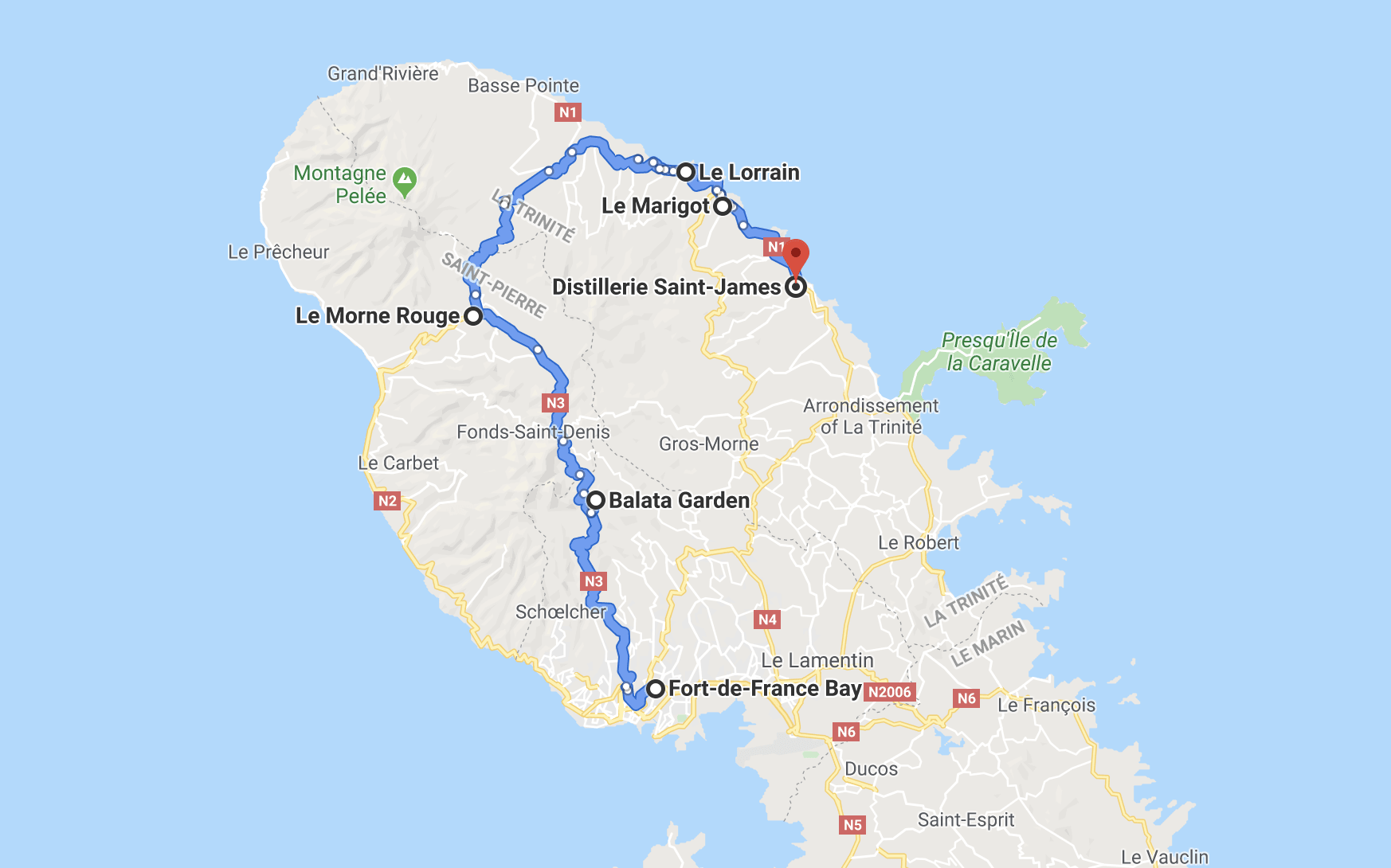
Our previous road trip had been such a success, exploring palm fringed beaches on Martinique’s Southern Coastline, that we decided to rent another car any try again. This time, we were to cut through the centre of the island visiting Jardin de Balata, then making our way down across the Atlantic coast of Martinique towards Saint-Marie and the Saint-James Rum Distillery.
Le Morne Rouge is a beautiful part of the island to explore as you head up into Northern Martinique, but also a historic home to the immense disaster of Saint-pierre, where the entire town was destroyed in 1902 by the volcanic eruption of Mount Pelée. Before the devastationg eruption, Saint-Pierre was the cultural capital of Martinique, known as “the Paris of the Caribbean”.
Nowadays, you can instead still see evidence of the disaster & historic remains, and visit the Volcanological Museum (Musée vulcanologique Franck Perret).
Le Lorrain & Le Marigot
As you head around the bend towards the Atlantic coast of Martinique the scenery transforms into sweeping hillsides of banana plantations overlooking the ocean.
This part of the island reminded me a lot of my visit to Kauai, Hawaii and was a whole new side of Martinique our previous road trip didn’t show.
I highly recommend the restaurant Le Point de Vue for excellent Caribbean food and ocean views, I would gladly pass another day here.
Northern Martinique Road Trip Details
From: Fort-de-france To: Sainte-Marie, Martinique
Stopped in at: Jardin de Balata (Fort-de-france), Le Morne Rouge (Sainte-Pierre) Le Lorrain, Le Marigot, Distillerie Saint-James (Saint-Marie)
The small port-side village of Lyttelton, New Zealand is a place close to my heart. It’s where my grandmother lived when I was growing up; it’s a short boat trip away from where my family lives now; and it’s where my partner and I ended up, by chance, renting a house for the first 6 months of our unexpected and extended stay in New Zealand (thanks, pandemic!)
The village feels like a world away, it’s beautiful, and the sense of community is something I adore. Yet it’s a very quick drive through the tunnel to the heart of Christchurch city. It’s kind of the best of both worlds, in many ways. It doesn’t feel at all like the city, Lyttelton. And in fact, before the tunnel was built through the port hills, it really was much more on its own.
Nowadays it has the accessibility of a suburb, with the charm and feel of a small town. Throw in loads of lovely houses, gardens and native birds; and you have quite the undiscovered little haven of a town.
I haven’t always written about New Zealand, but I am extremely proud of where I come from, and after having spent near to two unexpected years in the country, it felt about time to blog about it! So without further adieu, here’s three of my favourite things to do in Lyttelton.
1. Lyttelton Market
Every Sunday it’s time for the most wonderful things about Lyttelton – the weekly farmer’s market. People come from all over the region, as it’s surely one of Canterbury’s best markets. The Main Street of town is closed off to traffic and stalls pop up down the full length. The surrounding restaurants and cafés are bustling with people, and there are usually musicians and street performers. There is excellent produce to be found, locally produced cheese, meets & olive oils but my favourite stall is the bakery right at the end who make one of my favourite foccacia in the world – but you need to get there early as they sell out!
Pizza at Bomba Gelato, Lyttelton
2. Eat, Eat, Eat!
For such a small place, Lyttelton has an abundance of wonderful cafes and restaurants. It was a delight to spend our weekends exploring the different foods and excellent coffee. The Lyttelton Coffee Company has my vote for coffee, Bomba makes some of the best pizza you’ll ever try (and all made by one of the friendliest people in town), and for a few other places to get yourself to make sure to head to Forty Two – the restaurant of a good friend of mine; Super for awesome cocktails and asian inspired food; and Fisherman’s Wharf for fresh seafood right on the water.
–
3. Take the Ferry to Diamond Harbour
Every hour throughout the day (and even then sometimes more frequently) a small little ferry makes the seven minute hop across the harbour to picturesque diamond harbour. An even tinier town, with beautiful views, loads of walks, and a lovely little eatery to sit and enjoy a coffee. This also happens to be where my family are, so I love it for personal reasons, too! But it’s a wonderful trip to make if you want to explore more of the beautiful banks peninsula.
I arrived in Lesvos under the more unusual of conditions, and tourism was the last thing on my mind. Yet, the island is perfectly suited to tourism – and not in an over-done hyper-resorted Mykonos way, either. It’s perfect for an authentic taste of Greek life and a haven of delicious food, kindhearted locals and beautiful beaches.
My life was based in the beautiful port town of Myteline for four weeks, and one of the many things I learned from my experience here is what this little paradise needs is some more tourism. Loads of people have never heard of the island, and of those who have, many only know it because of the refugee crisis is has become synonymous with. But this is not a reason to avoid Lesvos – quite the opposite, in fact.
The island is a true European paradise, and the kindness and hospitality of the people shows just how special this hidden gem is. So please, explore this magical island – drink in the perfect mauve sunsets and sip ouzo at one of the numerous tavernas. Come here to enjoy Greece without the horrendous price tag or nightclub life of the more famous party islands! In my opinion, Lesvos is my favourite Greek Island .. and here’s three reasons why:
1. Historical writers & poets
Lesvos is famously home to the poet Sapphos, who has a permanent home (in the form of a statue) in her namesake Sappho’s Square in central Mytelini.
2. The picturesque small villages & abundant natural beauty
Being Greece’s third largest island, there is so much beauty to explore.The island is home to numerous charming small fishing villages, such as Panagouda, a smattering of castles to explore, and a petrified forest – not to mention an expansive coastline of gorgeous beaches.
3. Food, tavernas & ouzo
Lesvos is known by most Greeks as the place where the best ouzo comes from, more specifically the town of Plomari on the island’s Southern coast.
Clear waters, soft golden sand, scorching summer afternoons slipping lazily into long, dreamy evenings – the Albanian riviera paints a beautiful backdrop for enjoying the delights of the coastline without the crowds and price tag of Italy and France.
Once you figure out the endlessly changing location of the Tirana bus station, it’s fairly simple to make your way down to the sea. It’s also reachable from nearby Greece – both by land or by way of a quick and cheerful ferry ride over from Corfu to Sarandë.
Go, you must go my friends told me when I was living in Greece. We were all volunteers, living amidst an overwhelming humanitarian crisis with so much heart but very little cash. Many had travelled down Europe this direction, passing through the Balkans on their journey down to help out there.
Everyone raved about Albania. Underrated, affordable, kind and welcoming they claimed. It’s not a country I’d thought a lot about, but the recommendations echoed in my mind.
A while later, long after I’d left Greece with my heart in pieces I would make my way back to Europe, but this time it came at the tail end of an overland train journey across Asia, one spanning many months and ending in Ulaanbaatar, where, oddly enough I was able to get my hands on plane tickets from Ulaanbaatar to Tirana, Albania.
All of those encouraging words danced back into my memories as I planned a new adventure after Asia, one where I would catch busses across the Balkans. It would all begin in Albania, this country I’d heard so much of and knew so little about.
Sarandë – Lounging about, gazing out to the Ionion sea
Where is the Albanian Riviera?
Affectionately nicknamed Bregu, the Albanian riveria stretches across Sarandë and Vlorë in the Southwestern coastal region of Albania. In simpler terms, it’s in the lower corner tucked up against the Greek border & the nearby Greek island of Corfu, and with the toe of Italy just across the water.
This region of Albania is pretty accessible – you could catch the bus from Tirana , a ferry from Corfu(a very nearby Greek Island) a ferry from Brindisi(a much further away port of Italy), or busses from some of the bigger cities in neighbouring countries such as Skopje (North Macedonia)
Cute aquamarine breakfast spot on a Ksamil beachSunset dinner enjoying the sunset over Ksamil