
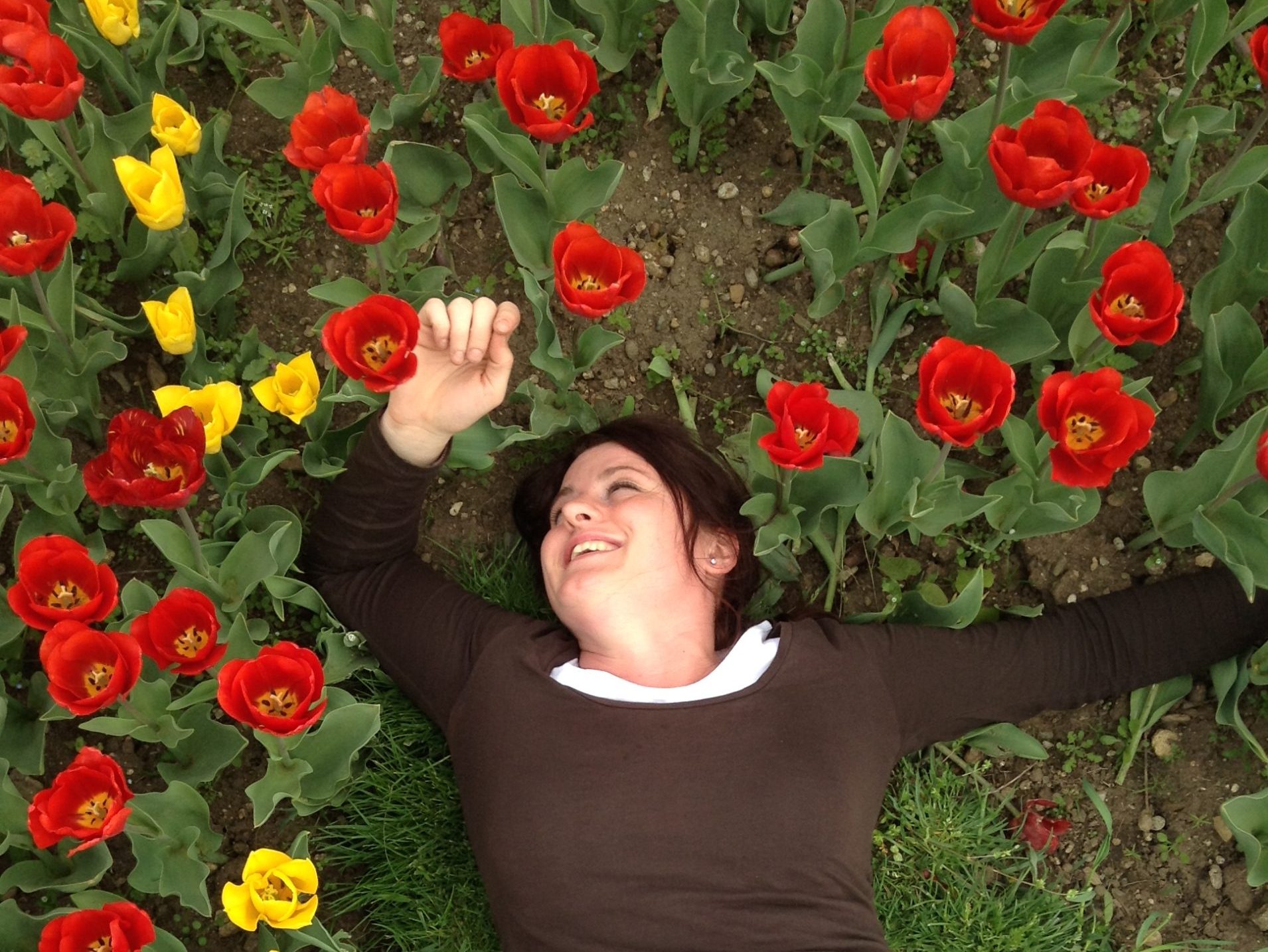
I was washing dishes last night, tuning out the day to a podcast while I scrubbed and loaded up the dishwasher. Joe Hudson’s voice through my headphones as part of my Connection Course homework. He was talking about wonder, not as some abstract concept, but as a way of being that I’ve carried my whole life without ever really examining it.
“Wonder is like curiosity without looking for an answer,” he said. “When you’re looking for an answer, you can just feel in your system that your system constricts a little bit. But if you’re just like, ‘Oh my gosh, what is happening here?’ and there’s no pressure to find an answer… the physical state remains expansive.“
This was something I knew intimately but had never called out or thought about specifically.
I’ve always admired children’s sense of wonder, and ever since becoming a mother, I’ve wanted to be someone who engages Emily’s sense of wonder rather than getting frustrated when she asks endless “whys.” I love to understand things, ask questions about everything (I think this is my natural curiosity and wonder coming through).
Wonder doesn’t require an answer. You can just wonder about what something is or why or how, without needing the answer. In our Google-driven world, answers are easy to find. The wondering itself is what matters.
Joe also talked about how wonder with a motive can feel creepy, and that got me thinking about something I’d never connected before. Sometimes when people ask me lots of questions, it feels exciting, like they genuinely want to know me. But other times, the exact same behaviour feels invasive or prodding. The difference, I realised, isn’t in the questions themselves but in the quality of curiosity behind them.
Authentic wonder is like genuine enthusiasm in presentations. It comes across as real because it is real. Someone giving a presentation about something they don’t care about has a lot of parallels to somebody asking questions when they’re not actually in wonder, but instead have a goal they’re trying to reach. This connects to something I wrote about before, the infectious enthusiasm of those chocolate frog professors who genuinely care about their subject matter. If you’re really in wonder, that comes across as genuine. It’s the difference between curiosity that seeks connection and questioning that serves an agenda.
I know exactly where wonder lives most naturally in my life. When I watch Emily discover the world, the way she stops to examine every interesting rock, how her eyes light up when she spots a magpie in the garden, I’m reminded of what unguarded curiosity looks like. She doesn’t need answers to everything. She’s content to point and marvel.
The garden brings the same quality. Spending time with plants, whether it’s planning companion plantings or just watching the way morning light hits the leaves, it’s impossible not to feel wonder at the natural world. There’s no performance pressure there. Emily doesn’t need me to be an expert on entomology when I point out an interesting insect. The plants don’t evaluate my credentials, they just respond to attention and care.
These spaces feel safe for wondering because they’re genuinely reciprocal relationships. I learn from Emily as much as I share with her. The garden teaches me as much as I tend to it.
But something different happens when I try to bring that same wonder into my technical work. I start out beautifully. New technology, workflows, and tools light me up. I get really into thinking about how they could be used, what they’re similar to or different from, how they might work in unexpected ways. That’s pure wonder in action.
But then I almost always shift quickly from wonder into answer-finding mode. And then, here’s the strange part, I stall when it comes to sharing my discoveries with others.
I think there’s a perfect storm happening here. First, perfectionism kicks in: “This insight isn’t complete enough yet.” Then imposter syndrome: “Who am I to share this discovery?” Then the cultural programming I grew up with, that tall poppy syndrome reminder not to stand out or claim too much expertise.
The AI field makes this worse. There’s pressure to constantly consume and adopt, to have hot takes on every new framework, to keep up with a pace that’s frankly exhausting. It’s like trying to observe fireflies while someone keeps shining a flashlight and demanding I categorise each species immediately.
Sometimes I feel frustrated at how quickly the industry moves. It requires too much constant adoption to pause and be in genuine exploration. The wonder gets squeezed out by urgency.
If I’m honest, some of this pressure is self-imposed. My ADHD brain wants to chase every shiny new development in AI. I find myself trying to follow the industry’s pace rather than my natural exploration rhythm, the same rhythm that creates my best insights when I give it space.
What if the real constraint isn’t time for wondering, but permission to wonder at my own pace? What if instead of trying to blog about every new AI development, I could be the one who finds unexpected connections by sitting with fewer things longer?
But then reality hits. I’m giving two presentations on MCP architecture in eight weeks. I can’t slow down, I need to move forward with it. The timeline is set, and I need to deepen my expertise quickly enough to deliver credible talks.
Here’s where something shifted for me. What if this deadline could actually work with my wonder patterns rather than against them?
Instead of “I must become even more of an expert, fast enough not to embarrass myself,” what if it becomes “I get to explore this fascinating technology deeply and share what I discover along the way”? The same intensive timeline, but reframed as an exploration opportunity rather than a performance demand.
The presentations become a vehicle for sharing my exploration rather than a test of my expertise. Audiences connect more with someone sharing their genuine curiosity than someone trying to prove they know everything. And honestly, approaching it with wonder rather than expertise anxiety will probably make for much better presentations anyway.
There’s something Joe said in the podcast that keeps coming back to me. He talked about being “in the question” for ten years, not trying to answer it, but living in it. “What am I?” was his question, and every answer he came up with was just based on some context. The power wasn’t in finding the answer; it was in being in the question.
I think about this when I’m in the garden with Emily, watching her examine a snail shell. She’s not trying to solve the mystery of the snail. She’s content to exist in the wondering with it. There’s something to learn from that, about allowing curiosity to be enough, about not rushing to conclusions or solutions.
Maybe living in wonderment isn’t about having more time for pure exploration. Maybe it’s about bringing that garden-quality attention to whatever constraints I’m already working within. Even with presentation deadlines and industry pressures, I can choose curiosity over performance anxiety.
The real practice isn’t carving out separate time for wondering, but protecting that quality of attention wherever it wants to emerge. Following the trail of genuine fascination rather than the urgency of trending topics. Letting myself be genuinely curious about MCP architecture because it’s interesting, not because I need to position myself as an expert.
In the end, wonder might be less about changing what I do and more about remembering why I started doing it in the first place. That spark of “I wonder how this works?” that drew me to coding, to AI, to building things that didn’t exist before.
Emily points at butterflies not because she needs to catalogue them, but because they’re beautiful and surprising. The garden grows not because I’ve mastered botany, but because I pay attention to what each plant needs.
Maybe that’s enough. Maybe wonder isn’t something to optimise or systematise, but something to protect and follow wherever it leads, even if that happens to be toward a conference stage, sharing discoveries that are still unfolding.
Leave a Reply