Good travel doesn’t happen by accident. These posts dive into the practical side of nomadic life—from choosing destinations to managing logistics to making the most of limited time in incredible places. I share what I’ve learned about traveling thoughtfully, sustainably, and with purpose.
I originally wrote this three years ago on the anniversary of my father’s 67th birthday. Today would be his 70th, so I’ve decided now is a fine time to move it off facebook and onto my blog instead. So, here we go:
It feels stilted and uncomfortable to try and celebrate the fact you were born, when I’m still grappling with the idea that you ever left
I’ve thought through the morning how to rustle through the grief for a thread of celebration, to put aside the two missed birthdays behind us and instead focus on the time that you were here before that. Focusing on the idea that celebrating somebodies life and birth need not require their presence.
For your birthday I cannot get you gifts or take you for dinner, even though I have since discovered surely no less than five thousand new places I think you’d love to go.
We can’t go away together on a trip, and you have no pockets to hold your passport.
I can’t cook for you any longer, but I can spend my life scouring the tiny corners of the planet for the kinds of foods you would love to try.
I can only bring you with me in memory for the railway journeys and street food excursions, the adventures in mistranslation and the most bizarre of travel stories I know that you, and only you, would appreciate. I can carry you with me in my thoughts, and more importantly through my words and in my stories, and for that experience I am grateful.
I think you’d be happy this year. Happy for our annual birthday check-in – where we talk about our lives and our goals, where we’ve been and where we are going in this crazy life. I’d get to tell you all about the life I’m living, you’d listen with great interest as I told you about how I finally visited the Amazon. You’d immediately ask if I saw any Anacondas, and tell me some hilariously inappropriate story about lost adventurers being eaten alive, knowing full well it would do nothing but fuel my sense of adventure.
We’d talk about my job, and how incredible it is that everything you taught me, all you encouraged me in from the moment I could use a keyboard had brought me to where I am. I’m living my dreams, I’d say. I have a great life and a wonderful job, I make good choices in my life and relationships and I know how to stand on my own two feet.
You’d be so proud.
What are you reading today? you’d ask.. scoping me out for new book recommendations as you made a large handful of your own. Exchanging books became a bit of a birthday tradition, didn’t it? I’ve read so many of your books since we last spoke. I’ve kept them all and as I make my way through page-by-page I take tiny pieces of you from every character I meet. I don’t keep things, I don’t own stuff, but I kept every single one of your books.
If it were your birthday today, in person and for real, I would be looking forward to hearing about the latest addition to your miniature railroad. That land that exists as a magical other world spilling out from your spare bedroom. I’d await eagerly the latest news of the tiny locomotive making its way in a missing package from Germany, we’d joke about the world tour it was taking as we spied on the tracking number in anticipation of its arrival. Prodding you to let it expand and take over your house, tiny tracks making trails across all the walls and out into the world.
But instead, you’re not here.
And for your birthday I’m left with a million happy memories and a series of questions. Where will I next find your memory? I find you in the strangest of places – I find you in the comforting clack-clacking of late night rail journeys, and I meet you again in every geranium, I remember you in anteaters and in thistles, Thai food and mistranslated English signs. I find you in Bill Bryson, Paul Theroux, Paulo Coelho. I find you when I finally discover where the missing semicolon was hiding amongst ten thousand lines of code and I laugh, I laugh out of frustration and relief and because I remember how it would make you laugh just the same.
I find you when I look at the person I’ve become, the jokes that I find funny and the ways I’ve grown to see the world. It’s in all these places that I find you that I get to celebrate your birthday. Happy birthday. Thank you for never quite leaving me, and for all the places you turn up.
Two years ago today my father died. I hope today by focusing my thoughts away from grief and loss and instead into sharing gratitude and love with the world around me I can shine some happiness into an otherwise difficult day I’m grateful for … inheriting your sense of adventure and braveness for visiting places for their culture and people, not tourist sites for encouraging me always to pursue what I’m interested in passionate about and not letting me settle for less than that for being my source of unwavering rational advice and practical solutions, peacekeeper and careers advisor.. over and over and over again for having me, rent free in your home all the times I chose paths of volunteering, or when I was simply just lost in life for a brief moment fish and chip Fridays your amazing model trainsets your wonderful sense of humour for keeping your shelves always stocked with new books for me to devour for a childhood worth of weekend swimming pool & hydroslide adventures for introducing me to Thai food and my first ever green curry sparking a lifelong obsession for all the quiet nights in watching trivia gameshows on the tv with you for always telling me how proud you were, even when the choices I made probably terrified you for teaching me how to use a computer from when I was about as small as the picture here, and not much later on teaching me how to code .. skills that have led to where I am today for every time you got up at 5am to drive me to an ambulance shift when I was a grown adult and probably should’ve worked it out for myself for bailing me out of so many things, so many times For always sharing my writing and telling anyone who’d listen about me and my work for introducing me to the wider world through stories, books and conversations for the endless hours spent in logic puzzle books with you for taking a morning out of each and every day to go out for coffee with me before work in the weeks before your cancer properly took hold For telling me in those last few days to keep traveling, keep pursuing my dreams, keep focusing on this life I’ve built once you’re gone
Towards the end of 2021 I moved to Puerto Vallarta for four months. It was far from my first time in Mexico, but It was my first time in this city as well as the state of Jalisco. When I move someplace new, one of the first things I want to know is an overview of the different neighbourhoods. The various barrios, or Puerto Vallarta neighbourhoods, have distinctly different vibes. So I got together with a few other bloggers who know Puerto Vallarta well to create a guide to the different areas most commonly inhabited by tourists and expats.
Puerto Vallarta is a city in the state of Jalisco. It’s on the Pacific Coast of Mexico, just below the Baja region, not too far south of Mazatlan and straddling the state of Nayarit. It’s picturesque – where the ocean meets lush green jungles & the Sierra Madre mountain range. It’s an excellent place to see whales, enjoy the ocean, and taste some typical Jalisco food.
There are of course, many many more barrios than those mentioned here! These are just the ones you are most likely to encounter when checking out hotels, airbnb, or rentals geared towards foreign expats. If you know Puerto Vallarta well, and would like to contribute a neighbourhood to this guide that’s not already covered, let me know! I’d be happy to include you.
Puerto Vallarta is a bit of everything – tourist mecca meets traditional Jalisco life,
Centro
Recommended by Vicky of Buddy The Traveling Monkey
One of our favorite neighborhoods in Puerto Vallarta is the “Centro” neighborhood. It’s nestled between the “5 De Diciembre” neighborhood and the “Zona Romantica” neighborhood. Centro has a very high-energy vibe. It’s perfect for those wanting to experience Puerto Vallarta’s lively and bustling scene.
In Centro, you will find Puerto Vallarta’s malecon, a stone boardwalk that is approximately one-mile long. There are always people walking, jogging, or biking on the malecon. There are usually food and craft vendors too. It’s a great place to people watch! A lot of the free things to do in Puerto Vallarta can be found in Centro as well. The Church of Our Lady of Guadalupe is an iconic landmark and free to enter. You can also visit the ChocoMuseo. This free museum tells all about the history of chocolate. Centro also has a lot of great restaurants and bars. If you love seafood, definitely head to Restaurant El Malecón. It’s on the beach and a great place to watch the sunset.
Zona Romantica (aka Romantic Zone or Old Town)
Recommended by Sarah from Live Dream Discover
The Romantic Zone is aptly named as it is the heartbeat of Puerto Vallarta. Here the narrow cobblestone streets are alive with tourists, ex-pats and locals enjoying the many restaurants, bars and shops in the neighborhood. It’s safe to say that every visitor to Puerto Vallarta will spend time here. This is also the home of Los Muertos beach, the most popular beach in Puerto Vallarta. Of course, this means it’s not the most peaceful beach in PV. But if you enjoy a lively atmosphere created by people of all ages along with watersports, beach activities, vendors and beachside bars you’ll love Playa Los Muertos.
A walk on the iconic pier is another must on this beach. By day, top things to do in Zona Romantica include lunch on Olas Atlas (Café Street), shopping at Olas Atlas Farmer’s Market and Isla Río Cuale Flea Market and of course enjoying the beach. After dark, the neighborhood becomes even livelier with the sound of music and people enjoying the many bars, clubs and entertainment venues.
The Romantic Zone is very gay-friendly with several bars catering to the LGBTQ community who love Puerto Vallarta. For a lower-key evening there’s great live entertainment at Act II Theatre and Incanto. Accommodations in Zona Romantica tend to be small boutique hotels, vacation condos and guest houses. This is not the place to stay if you want large luxury, all-inclusive resorts. There are also quite a few residences here housing ex-pats and locals.
Gringo Gulch
At first glance, the name of this Puerto Vallarta neighbourhood catches people off guard! But despite how it might seem, Gringo Gulch was a name given to the area by the Gringos themselves, and is not considered anything negative. The barrio is made up of a little stretch of houses just up the hill from Centro, running along the Rio Cuale.
Here you will find some more traditional housing dotted amongst some incredibly luxurious villas. This is where Elizabeth Taylor and Richard Burton had their house Casa Kimberly; which is now a fancy hotel & restaurant you can visit.
Gringo Gulch is beautiful, a little hilly, but with excellent views and close proximity to lots of restaurants and all the action of Centro Vallarta & Zona Romantica.
There are not many restaurants here, just housing and holiday villas. The main dining attraction here is the Iguana Bar at Casa Kimberly, this former house of Elizabeth Taylor and Richard Burton offers fine dining, stunning views, crystal chandeliers, and a top-notch tequila bar.
Gringo Gulch is a beautiful neighbourhood to stroll around, a haven of cobblestone roads, tiny staircases winding up the hill and blossoming bougainvillea. From here, you can easily get down to the beach in just a few blocks; walk over to Cerro and up to the Mirador el Cerro de la Cruz from here for amazing sunset views; or down the Puente Iguana stairs to the Rio Cuale Island, and across to Zona Romantica for plenty of restaurants, bars, and things to do.
El Cerro
El Cerro means ‘The Hill’ in Spanish, and it’s a fair descriptor for this Puerto Vallarta neighbourhood! Cerro is just up in the hill behind Centro next to Gringo Gulch, and is part of Puerto Vallarta’s original old downtown. Despite being a quick and simple walk down to Centro, it feels like stepping into a small town. The bustle fades away, and is replaced with roosters cawing and the sound of kids playing in the street.
Cerro is where we rented for 3 of the months whilst we were based in Puerto Vallarta and I’d recommend it for the old-town Mexico vibes, incredible views, and the convenient location. Most of the restaurants around here are technically down in Centro, but there are some amazing finds up here if you know where to look. Restaurant & Bar El Panorama, the famously extravagant Café des Artistes, and Restaurante Barcelona are all excellent restaurants in the area.
Cinco de Decembre
Introduced by Bailey from Destinationless Travel
One of the best neighborhoods in Puerto Vallarta is 5 de Diciembre (or 5th of December.) This area is the perfect place to base yourself in Puerto Vallarta thanks to its central location and stunning beach. 5 de Deciembre is located just north of Centro and the Malecon in Puerto Vallarta. This location means that you are still within a vibrant and safe area with easy access to some of the best attractions Puerto Vallarta. You can walk to the Malecon in only a few minutes, which is one of the busiest tourist areas in the city. But 5 de Deciembre is also a lot calmer than other neighborhoods in Puerto Vallarta like Centro or Zona Romantica.
There are fewer people around and the beach, Playa Camarones, is always much more peaceful with fewer crowds and vendors. In fact, Playa Camarones is a favorite beach in Puerto Vallarta with both tourists and locals. It is clean and beautiful with epic sunsets. Some of the best restaurants in Puerto Vallarta are located in this area too. For a fancier seafood meal, you cannot miss El Barracuda. Located right on the beach this place has the best location. But besides that, the food is very tasty with a variety of creative seafood dishes to choose from made with locally sourced ingredients.
El Remence / Las Canoas / Buenos Aires / El Caloso / Las Penas
Tucked away in the hillside behind Emiliano Zapato, you’ll find a cluster of small Puerto Vallarta neighbourhoods which on first sight, feel much less touristed than their nearby counterparts. These small barrios share a similar vibe which is much more laid back. They are still popular with expats and tourists, and most Mexicans I’ve talked to have sadly described them as rapidly gentrifying.
Whilst still a very quick stroll to Zona Romantica or Centro, the feeling here is much more small-town, friendly, and relaxing & through the hotter seasons much of life here is lived sunbathing, picnicking and swimming in the Rio Cuale river.
Las Canoas is where I lived for my first month in Puerto Vallarta, and I will readily recommend it to anyone as an excellent barrio to stay in. There are plenty of smaller restaurants and street food vendors here, and if you’re looking for more it’s a very quick and easy walk over to Emiliano Zapato where much of Puerto Vallarta’s best food can be found.
Amapas
Sometimes described by locals as the “Hill of Airbnbs”, Amapas sites just south of Zona Romantica but before you reach Conchas Chinas. It’s the hillside on the South of Centro, looking over Zona Romantica and is full of gorgeous AirBnBs.
Much like Conchas Chinas, there is not much else here to do or to eat, but you have close access to all of the wonderful restaurants in Emeliano Zapata, and some stunning coastline to gaze into. Many of the accomodations here are more modern, and less traditional. You’ll find plenty of pools and patios with amazing sunset views.
One highly recommended restaurant in Amapas you’ll be close to, however, is Hot Mamma’s Whiskey Kitchen – which has many well earned good reviews thanks to their excellent fried chicken.
Emiliano Zapata
The barrio of Emiliano Zapata is named after the revered Mexican revolutionary, and is the original old town of Puerto Vallarta. Some people call this interchangeably with the ‘Old Town’ or ‘Zona Romantica’ but it’s a little more nuanced than that. This is why I have them as two separate neighbourhoods here.
Whilst the entirety of Zona Romantica lies inside Emiliano Zapata, there are a number of blocks inland which are not really considered Zona Romantica at all. So could could say that the Zona Romantica is a section inside the wider area of Emiliano Zapata.
As you head in towards the Rio Cuale from Zona Romantica, things will start to feel less touristed and more local. The food gets better, more Spanish is spoken, and in my opinion this is one of my favourite parts of Puerto Vallarta.
If you’re on the lookout for an authentic foodie experience, and a spot close to the action without being right in it, this inland part of Emiliano Zapata is an excellent choice. Try Marisma Fish Taco & Balam Balam for great fish tacos, Red Cabbage Café for food themed around what was served at Frida Kahlo & Diego Rivera’s wedding dinner, and Carnitas Lalo in the morning for the best carnita tacos (a typical breakfast food, unbeknownst to many visitors!)
Conchas Chinas
Recommended by Noel Morata with Travel Photo Discovery
Playa Conchas Chinas is on the far side of Puerto Vallarta’s beaches and is truly a gem because it is more isolated then the main beach lining up the large malecon of the city. Also to get to the beach is an Uber ride or bus ride and you actually have to hike down directly to the beach area from the main highway on top. The beaches here are mostly small coves with giant rocks and gorgeous views of the rests of the coastline north and south of the city.
These beaches are not so busy, so you can easily find your own perfect spot to lounge and enjoy the ocean mostly on your own and without any crowds. Vibe is low key with condos and homes in the area and just a few restaurants by the highway on top, so there is really not much of a neighborhood to stroll and enjoy unless you opt for any of the ocean views from the restaurants above. There are also no hotels but maybe Air Bnb rentals in the area so there are no crowds flocking to this beach.
The few restaurants here cater to a mostly affluent residence and dinner is the prime time to eat. Since I was there just a few hours I didn’t get a chance to eat at Conchas Chinas but took an Uber ride back to the main tourist zones of Zona Romantica to find a lot of choices in food venues. This area is definitely off the beaten path with beautiful sandy coves far away from crowds, so if you are looking for something unique, gorgeous coastline scenery and hardly any visitors, then you should check out this beach area and enjoy a fun day in the sun in south Puerto Vallarta.
Fluvial
The barrio of Fluvial backs onto the hotel zone, and is an upscale residential area bordering the Pitillal River. What it lacks in tourist activities, it more than makes up for with an abundance of shops, schools, and dining options. From here you have great access to Costco, Plaza Caracol, Macroplaza, and the Food Park PV food court.
There are also many more townhome style accomodation options compared to most of the barrios mentioned in this post. So if you’re looking for a house, rather than a condo, with great accessibility to shops and services, Fluvial is a good spot.
For eating here, you have an abundance of choices. The well known brunch spot Fredys Tucan has a branch here, and the Food Park PV has a selection of awesome food vendors.
Zona Hotelera / Hotel Zone
Introduced by Lora from Explore With Lora
Puerto Vallarta’s Hotel Zone is where you’ll find some of the top hotels right on the beach. If you’re visiting for the first time and looking for a safe, family-friendly area with lots of amenities, then this may be a good area to stay. Since it’s mainly for tourists, most expats don’t typically live in this area. Within the hotel zone, there are an abundance of beautiful hotels, resorts, and modern apartment buildings stretching along the golden-sand beaches.
While it includes top rated hotels such as the Sheraton Buganvilias, there are also accommodation choices to suit any budget. The location is convenient, just a 15-minute from the airport and 10-minutes from downtown. The beach will be right outside your door, with ample opportunity for water sports. Since Puerto Vallarta isn’t that large of a city, you can actually walk to several of the other neighborhoods from the Hotel Zone. Versailles is nearby, where you’ll find some of the best local restaurants in the city.
Zona Hotelera Puerto Vallarta
Versalles
If I were to move back tomorrow, and had my pick of all the different Puerto Vallarta neighbourhoods; Versalles would be where I would choose now. It’s a little off the tourist trail, but still very close to the beach. You can walk to the nearby 5. de Dec. neighbourhood easily from here, and it’s a short Uber ride to Centro and Zona Romantica.
The thing I love most about Versalles is the feeling – it feels more like normal Mexico life. It is, however, rapidly gentrifying so things may be incredibly different in 5 or 10 years time. It does mean though that modern condos are popping up all around, and there are some excellent restaurants and brunch spots to check out.
Some crowd favourites to dine are Puerco de Oro for the best pork belly tacos in town, Tortas Ahogadas Tony for the best tortas ahogadas (a Jaslico speciality) around, and Cha’ for a legendary brunch.
Marina Vallarta
Marina Vallarta is the Puerto Vallarta neighbourhood closest to the Airport, and is home to a number of large resorts such as the Westin & the Marriott. If you’re heading out on one of the many, many boat tours available they will most likely leave from here, too.
Accomodations around here can be a little pricier than other parts of town, but they are also quite modern and have close access to the marina, beaches, and golf course. This draws a lot of foreigners in, so you will find many expats and a lot of English spoken around the Marina.
One of the main attractions of Marina Vallarta is the weekly night market, which happens every Thursday evening. And to eat, Mr Cream is a well known brunch spot, with some of the best pancakes in Puerto Vallarta, but be prepared to queue! Victor’s Place Cafe Tacuba is another waterfront spot with excellent enmoladas.
Neuvo Vallarta
Introduced by Claire from Claire’s Itchy Feet
Nuevo Vallarta is a bit like the Cancun of Riviera Nayarit. It’s split into 2 very distinct areas, the hotel zone and gated communities on one side of the highway. And the more local area across the other side of the highway. I’ve been living in Nuevo Vallarta for over a year now and have lived on both sides of the highway. The hotel zone is a super safe area full of large resorts, gated communities, nice restaurants, and lots of green spaces. It’s well connected by collectivos (small local buses) and easy to walk or bike pretty much anywhere. Unless you are staying in one of the resorts, it can be tricky to find one of the few public access points to the beaches, but they do exist. There is a bike lane running the full length of Nuevo which will take you right up to neighboring Bucerias.
Most people who vacation here are staying in one of the all-inclusive resorts. But it is also a popular area for medical and dental tourism, with some of the best Drs in Mexico practicing here at the private hospital. For expats and remote workers, what’s great about Nuevo is that the rent is lower than in Puerto Vallarta and you get a lot more space (both indoors and out). The WiFi is strong and fiber optic is common. It’s close to surfing beaches but still only 15 minutes from the airport. Most ex-pats who live here either live in one of the secure housing estates at the entrance to Nuevo Vallarta hotel zone in the Jaretarreras area, or over the other side of the highway in Valle Dorado.
Some of my favorite places to eat in Nuevo are Doña Raquel’s (just off the roundabout as you enter Nuevo by OxxO opposite El Tigre) it’s a small local restaurant with the best Pozole! Her husband is from the USA and they also have Chicago-style ribs and some other classics. For breakfast I’m obsessed with Paninnos, make sure you try their cinnamon rolls. And if you want a healthy lunch then try Organi-K down by the marina.
El Pitillal
Many visitors to Puerto Vallarta never see el Pitillal, a small town in its own right surrounded by Puerto Vallarta. It’s only 20 minutes driving away from the more well known parts of Centro Puerto Vallarta, but has the feeling of small town, traditional Mexico.
Located North east of the Hotel Zone, just near Fluvial, el Pitillal is a great place to experience a more typical style of life in the state of Jalisco. Whilst not much of a tourist stop, it’s a good place to see where many of the people who work in Puerto Vallarta live, shop, eat, and enjoy their free time. And if you speak some Spanish, it’s a great place to enjoy a less tourist driven way of life.
El Pitillal is the perfect spot to enjoy the delicious regional specialities of Jalisco, such as tortas ahogada & birria, and find traditional clothing, handicrafts, art, and performances.
New Zealand’s South Island is one of the most beautiful and easy-going places in the world for a road trip. I may be a little bias, we are talking not just about my home country. here – but my home island, and even home town! But in any case, I’ve driven around these parts many times and can personally testify what an awesome road trip route it is.
Starting from Christchurch, there are two main ways to get to the top of the North Island. Whilst the coastal route is the scenic & more touristed one, I prefer to take the inland route up the South Island. This path will take you through Waipara, MarbleHill, Lewis Pass, Daniels Lake, Kaiteriteri, Nelson, Picton, the Queen Charlotte Sounds, Renwick and Blenheim before either looping back down the coast to the South, or shopping on the ferry bound for the North Island.
What time of year is best to visit the South Island of New Zealand?
My favourite time of the year to take this road trip is on the outer edge of summer, in February or March. The roads are laden with roadside peach vendors and apple stores outside the orchards, sunny golden beaches and green leafy campsites. Every season brings its own charm to the region though, with snowy & steaming hot pools in the winter, abundant blossoms in the spring and richly coloured orange and red grapevines in the autumn.
However, the South Island is great to visit year round – and no matter when you go, the seasons will be changeable. To get an idea of the current climate, head to Canterbury Weather Updates for the Canterbury regions, or MetService to get a bigger picture for the Buller, Nelson and Marlborough regions of (Northern parts of) the South Island.
The New Zealand summertime spans December through to March, although some years you can find winter sprawling out into January. Likewise, if you pick a good year, the warm summer days can last as late as April. December and January are definitely the busiest periods for this part of the country, so if you want good weather, but to avoid some of the crowds (sorry, this is a popular place – there will always be some crowds!) then choose the warm, ‘shoulder season’ late summer months of late February and March.
Autumn and Winter bring their own benefits – snowcapped peaks and gorgeous vineyards & orchards during the harvest await those who come exploring from April to August, and spring (although traditionally wet and windy!) still has nice days with crisp evenings that are perfect for popping into the steaming hot pools, and beautiful blossoming orchards around the Nelson region.
Where to start this amazing road trip?
Personally, I start in Christchurch. It’s my home town, and due to the massive earthquakes in 2010/2011, has been going through a fascinating rebuild and revival. There is plenty to do and loads of accommodation, and don’t worry – the seismic activity has almost entirely settled down at the time of writing! However, this part of New Zealand is accessible from any direction, so it is super easy to fit it into your own travel plans.
Blenheim andNelson both have regional airports that you can fly into from many other New Zealand domestic locations, this may be more convenient but be prepared that the flights are almost always more expensive than those between larger cities! But will have incredible views and lower altitude due to the smaller planes.
BothWellington andChristchurch have excellent international and domestic airports that you can fly into from across the country and world.
If you’re driving, then Wellington and Christchurch are the biggest & most practical cities to leave from. When we did this, we were leaving my hometown of Christchurch so it made sense to leave from there and head north – but many people travel this route in the opposite direction. The Marlborough and Nelson region makes an excellent part of a larger journey between Auckland and Queenstown, and there are many different companies offering rental cars and campervans in the area, check the end of this post for some recommended companies.
Stop 1: Waipara Valley & the Alpine Pacific Triangle
Heading north out of Christchurch, an easy 45 minutes out of town comes Waipara. A wine-making region gaining steady popularity over fantastic Pinot Noirs & Riesling, Waipara makes up one point on the Alpine Pacific Triangle – a scenic region famed for bubbling hot springs, vineyards and whale watching.
Stopping over in the Waipara Wine Region: Waipara is home to 31 different wineries nestled into the valley, there are 12 different cellar doors for tasting, and 4 different winery restaurants if you’re after a bite to go with your tipple. Some of the more prominent vineyards to stop in at include Waipara hills, Pegasus Bay and Torlesse. I especially enjoy Aromatics from this region, but they are also excellent producers of Pinot Noir and Sauvignon Blanc. The Waipara vineyards offer wine tasting, delicious lunches and even concerts sometimes in the summer. Having grown up less than an hour away, I have many fond memories of coming out for sunny gigs in the sun with a glass of wine. Take a look at Waipara Hills Wineries schedule to see what’s coming up next.
Stop 2: Choose your own hot spring adventure
When it comes to hot springs, you have a few options in this region:
Family Friendly: you can take the exit to the nearby Hanmer springs. New Zealand’s self proclaimed Alpine Spa Village, Hanmer Springs has bars, cafes, mountainbiking and the famous hot pools, suitable for the whole family. Take a look at the Hanmer Springs ‘Getting There’ page for more detailed information on planning a Hanmer detour. In Hanmer you’ll find many different hotels, AirBnBs, campsites, and guesthouses.
Luxury: For something a touch more romantic or luxurious, and my absolute favourite South Island stopover, Maruia Springs Thermal Resort offers small natural thermal pools, sauna, spa treatments and hotel packages (that include 24 hours access to the pools) starting from $199 at the time of writing. When taking the inland route through the Lewis Pass, Maruia is on the way so no detour is needed – you’ll drive right past the entrance.
Budget/Backpacker/Explorer: The Lewis pass has naturally occurring hot springs – some accessible by road, some involving more in-depth hikes. The most famous Sylvia Flats was unfortunately destroyed by dangerous slips in January 2017, but may get cleared and become usable again in the future.
You can check the NZ Hot Pools website for other spots, it’s an awesome website that outlines all the different hot pools, both spas and naturally occurring, around New Zealand. If you’re looking to go intrepid and find some free spots, with a bit of hunting & map-checking you can usually find dug-out hot water holes in the riverbeds to sit in, just don’t forget your bug spray!
Indoor Onsen style hot pool at Maruia Hotsprings
Ahhi-yu Foot Bath at Maruia Hotsprings
Driving the inland route through the Lewis Pass
In the end of 2016 and beginning of 2017, a combination of severe earthquakes and terrible rain caused massive slips down the coastal roads linking Nelson, Blenheim, Kaikoura and Christchurch. Although well and truly repaired now, this was a massive inconvenience for many people, however the silver lining is it forced people like myself to explore the inland route. Although driving through the Lewis Pass is considerably longer, windy and laden with hills, it is a spectacular scenic drive and takes you through many awesome places you mightn’t normally visit.
Not long out of Christchurch, heading north, you’ll quickly find yourself snaking through picturesque vineyards, dense beech forest and bone-white cliffs balancing precariously over rapids. It takes only around 3.5 hours to find the first campsite of the trip, and it it’s well worth the scenic hill-route.
After finally making your way out of Christchurch, and spending a night or two at one of the hot spring spots, it is a little too tiresome (and besides, too quick for a scenic jaunt about the island) to drive the whole way to Nelson, so I suggest camping out a night or two at a DOC (Department of Conservation) campsite around the halfway mark.
Finding campsites around NZ is super easy thanks to the DOC website’s excellent search function that allows you to narrow by region, access, types of permitted camping, price and facilities.
Marble Hill campsite has beautiful views of hills, beech forest, river and grasslands. The facilities are basic: Toilets and firepit/BBQs with plenty of spots to pitch a tent or park a camper.
There are so many beautiful walks in the area, and if you are here for more than a single night stopover you can hike to two different nearby huts. The campsite works on an $8NZD per adult, per night, camping fee through an honesty box system. You simply pop your money into an envelope with your car registration details & name, then attach a strip from it to your tent or vehicle. Credit cards are also accepted if you pay to the DOC representative who arrives at 7pm each night.
Preparing for the elements
Due to the Lewis Pass being snuggled away in a valley, it gets really cold here at night year round. When I camped here in the beginning of February (Mid Summer) it still got down to near zero degrees overnight (celsius), many nights it had recently gotten down to minus 5 even! It then got quite hot quickly in the morning and it was a race to open the tent up to the fresh air. So if you’re camping then be prepared for all seasons. This area is also prolific for sandflies all year round, so bring the insect repellant too.
Stop 4: Golden Bay, Kaiteriteri and the gateway to Abel Tasman
After leaving Marble hill you could leg it straight over to Nelson. But, you’d be missing out on one of the most beautiful parts of all of New Zealand! As a child Kaiteriteri and Golden Bay were frequent summer holiday destinations for my family, and I have so many happy memories of the gorgeous blue water, green forests and surreal deep, golden sands.
It’s a 3.5 hour drive from Marble Hill to Kaiteriteri, where you’ll find a string of beaches, and accommodation ranging from campsites, cabins, all the way up to luxury beachfront resorts. Golden Bay and Abel Tasman National park, in my opinion, are some of the most beautiful parts of the country.
Trekking the Abel Tasman regiontakes either some serious planning and equipment ,or a bit of cash to fork over to agencies who will organise it for you. It is an incredible journey though, and you can hike it all, Kayak it all, or mix it up.
It’s worth noting that these beaches are super busy in summer, and the camping spots along the hiking route have to be booked well in advance, but it all quietens down a bit in Feb/March once school goes back. Also note that if you’re exploring the Abel Tasman region, kayaking involves hiring a guide if you are not experienced.
Most of the campsites provide no cooking facilities – so you need to bring these along as well. However, if private beaches, lush jungles, turquoise lagoons and kayaking in clear waters with dolphins are up your alley, then it’s well worth the time, money and effort to look into doing it.
Alternatively, plan a day trip or overnight camping visit to Kaiteriteri, Totaranui, or one of the many other road-access campsites. In the Abel Tasman and Golden Bay regions there are plenty of options that don’t require a trek to reach.
Stop 5: M?pua, the cutest of small town New Zealand
Nelson is an awesome city, and Motueka is worth an explore too. But for something a little different, may I suggest the small town of M?pua. Explore the wharf, browse the boutiques by the water, eat fish and chips and enjoy this gorgeous little stopover for a night.
You can camp at one of the campsites, or take your pick from a selection of different accomodation options.
Stop 6: Hidden Camping Hideaways in the Queen Charlotte Sounds
The Abel Tasman and Marlborough Sounds region is full of popular campsites that burst at the seams over summer – but it doesn’t need to be so hectic. A simple DOC campsite search will turn up the smaller and more chilled out sites in the area.
One one trip, we pitched our tent on the waterfront in the absolutely spectacular and rather unknown Aussie bay. Nestled away in the awe-inspiring Queen Charlotte sounds, we were metres from the water’s edge with views of crystal clear waters and starfish resting on the pebbles underneath.
It is worth a look to find the smaller gems, and there are many!
All around New Zealand there are many hidden-away tiny campsites that are usually very cheap – often free. Simply visit the DOC website and either use their comprehensive search function or interactive map to find your next spot.
Aussie bay campsite provides:
Basic facilities on a small, tranquil, waterfront location. 6 non-powered/tent sites, so very small! But big enough to park a camper van on some of the sites.
A toilet and running water, but no cooking or showering facilities
You can pitch a tent right on the waterfront – just one metre from the ocean
Great swimming with clear water
Get there early afternoon – late enough that the campers from the night before have packed up and gone, but before the new people arrive, to score the best spots
Stop 7: Renwick, Blenheim and the Marlborough Wine Region
From Nelson, it is only a few hours drive to visit Blenheim and the famous Marlborough wine region. Around 75% of the total wine produced in New Zealand comes from this region, with a climate comparable in latitude to Portugal’s Douro Valley (although a touch cooler!).
Allan Scott is my favourite winemaker in the region, but you really need to get out and test for yourself! The best way to sample the many vineyards is by bicycle, and Blenheim doesn’t disappoint! There are many tour agencies that will rent you a bicycle, suggested itinerary & vineyard map. Alternatively the Marlborough Wine & Food Festival is an annual sellout and a great way to sample a large variety of the South Island’s most treasured winemakers and varietals.
For something a little different, one of my favourite accomodations I’ve stayed in this region is the Marlborough Wine Barrel Cabins where you stay in the most beautifully renovated wine barrels with sweeping views over the heart of the wine growing region.
Amazing wine is just one of the many reasons to love New Zealand, for 25 more check out the A to Z of Visiting Aotearoa
How to Finish the Road Trip
Heading out of this region you have two options – North or South. Seeing as we came from the South, we were Northbound on the Interislander Ferry.
Option One: North to Wellington
Leaving the Marlborough and Nelson region heading north is easily done via ferry. You have two options when it comes to companies,Interislander andBluebridge. Both provide on-board facilities for meals and upgrades to cabins.
Bluebridge docks much closer to the centre of Wellington, however Interislander provides a free shuttle service to central station. While Interislander provides an awesome lounge upgrade with free food, drinks and snacks, Bluebridge does offer a sleeper journey. Both services provide sleeping and showering cabins for an additional fee.
We opted for the InterIslander ferry from Picton to Wellington and splurged on the premium plus lounge. It was worth every cent of the $45NZD and we spent the entire short (3.5 hour) journey enjoying comfortable sofas, free WiFi and complimentary buffet-style breakfast, morning tea and coffee/juice/drinks/wine/beer.
Option Two: South to Christchurch and Beyond
If heading the other direction (or simply completing a full loop), then you would exit the region down to Christchurch. Being one of the biggest New Zealand cities, Christchurch has regular flights and bus connections further south. From here it’s super easy to get to Dunedin, Queenstown and Milford Sound. Christchurch Airport is international, so it’s also an easy spot to grab a flight out of the country.
Useful Links Mentioned in This Post
Practical Updates & Info
NZTA Traffic Updates – Get up to date information of traffic and road closures around the South Island before you drive
Canterbury Weather Updates – In-depth and human written forecasts for the Canterbury (South Island) region
Transport in the South Island
Transfer Car hook up with cheap (and even free) car rental returns, where you relocate rental cars back to their home base within a set amount of time. Some even provide free fuel and ferry tickets between the North and South Island.
Naked Bus Super cheap bus fares and bus passes around the entire country – some of their package passes include ferry travel between the North & South Island too.
Kathmandu a prominent store in NZ with branches in almost every city – sells hiking, camping and extreme weather gear. Can be quite pricy but the sales are often excellent.
Bivouac similar to Kathmandu, but stocks different brands (more Osprey, Icebreaker etc)
Trademe this is what Kiwi’s use instead of Ebay. If you’re looking for cheap/second hand gear (or anything, for that matter) this is where you go.
Up until recent years, I’d never visited the United States of America. It was a new and fascinating place which existed mainly for me through television shows and films. The first state I ever visited was Hawaii, followed closely by Florida, California and Colorado. After that, things took an unexpected twist and I found myself visiting some less touristed states: Texas, Arizona, New Mexico, Nevada, and Kansas made the list thanks to a long story involving a boyfriend and the circus.
It’s been a few years now since I began visiting and exploring in the US, but it’s taken me until right now to venture into a national park. With my proclivity towards wildlife, forests, and wide open spaces, that came as a surprise to me (and most people) so it was time to set that right. One of the best ways to see the US is by driving state-to-state and taking a road trip, so I got to work planning a day trip driving right through the national park.
We visited Rocky Mountain National Park in the first week of October whilst on vacation in Denver (In my opinion, one of the best cities in the United States so make sure to plan time to see the city as well!) and the colour of the autumn aspen trees was enough alone to make the trip worthwhile.
Timed Entry & Entrance Permit
Rocky Mountain National Park is one of the most visited parks in all of the United States, which means it’s super busy! To enter Rocky Mountain National Park between May 28 – October 11 2021 they are trialing a new timed entry permit, to limit the number of people in the park.
In order to enter, two things are required: a timed entry permit and a park pass / entrance fee. We booked only a week out, so options were limited. However, we were able to get a 1-3pm entrance (once you’ve entered, you can stay as long as you like) for all of the park except for the bear lake road.
Rocky Mountain National Park 5
Rocky Mountain National Park 7
Rocky Mountain National Park 4
Entering from the West, Looking for Moose
I’d love to see a moose in the wild, and so that was the specific creature I sought to spot. The park has so many incredible animals living in it, but many of them are very rare to see (such as mountain lions and black bears), and others only appear mostly in the wintertime (bobcats, snowshoe hares).
To help guide me on what I might be likely to spot, I found this incredibly helpful “Odds Of Seeing Wildlife On A Tour In Rocky Mountain National Park” guide from Yellow Wood Guiding, which is a nature tour company whom we didn’t use this time, but I would like to go with next time we visit the park!
As autumn gets into full swing, moose become less and less likely to find, as opposed to the summer months when they are fairly ubiquitous here. However, autumn is a great time to come and see some Elk and hear their mating bugling, so even if we didn’t find a moose, we were likely to see some elk instead.
At the advice of the internet we decided to enter from the Western side of the park through the Grand Lake Entrance Station, which is the only entrance on the West side of the four possible entrance stations, and explore some of the lakes and wetland areas across that side. Whilst moose are sometimes seen on the Eastern side, they are more often sighted nibbling on willows in the Western lakes and streams.
Often, Moose can be found down around Grand Lake town itself, or in the wet areas near the Kawuneeche Visitor Center – but as the park ranger advised us, during the elk rut the moose often head up to higher ground to keep well out of the way. So in this case, she advised us to try checking around the Colorado River Trailhead, Lake Irene, and the Milner Pass.
Rocky Mountain National Park 3
Forest Fires on the West Side of the Park
Sadly, Colorado saw two of the largest wildfires in state history last year (2020) where nearly 30,000 acres inside the park burned. This meant that the initial drive in from the West began with passing through large areas of burnt-out park, which is a little sad. But definitely not a reason to dissuade anyone from coming in this way! There is still a lot of park & beauty over on the West side of Rocky Mountain National Park.
Driving the Trail Ridge Road up into the Tundra
To get from the Western Grand Lake side of the Park to the Eastern Estes Park side you need to follow the trail ridge road, which is an incredible journey all the way up to the Alpine Visitor Center at 11,796 feet above sea level! This road isn’t open in the winter, as there is too much snow and ice. But when we went during early October, it was an amazing moonscape of rocks and tundras, known as “the land above the trees” you are above the timber line where trees won’t grow.
Trail Ridge Road is the highest road in any national park in the US – I’d never been up this high before, and altitude sickness is a real thing! Here, the alpine tundra starts between 11,000 and 11,500 feet. I didn’t spy any wildlife up here, but you can sometimes find marmots, pika, big-horned sheep and in the summertime, visiting elk.
Where to See Elk in the Fall
The incredibly helpful National Parks App recommended heading down to the Eastern side into Moraine Park and around Upper Beaver Meadows around dusk. So this is where we headed to at 5.30pm. Sure enough, we found elk on the side of the road in three different places. We could hear the incredible sound of the bugling, and saw some impressively large antlers.
I had thought we would need to search a while to see elk, or at least hike a little off the road – but it turns out they are right there, and were very easy to see.
This isn’t my video, but you can see (and hear!) how magnificent & intimidating the elk are in autumn!
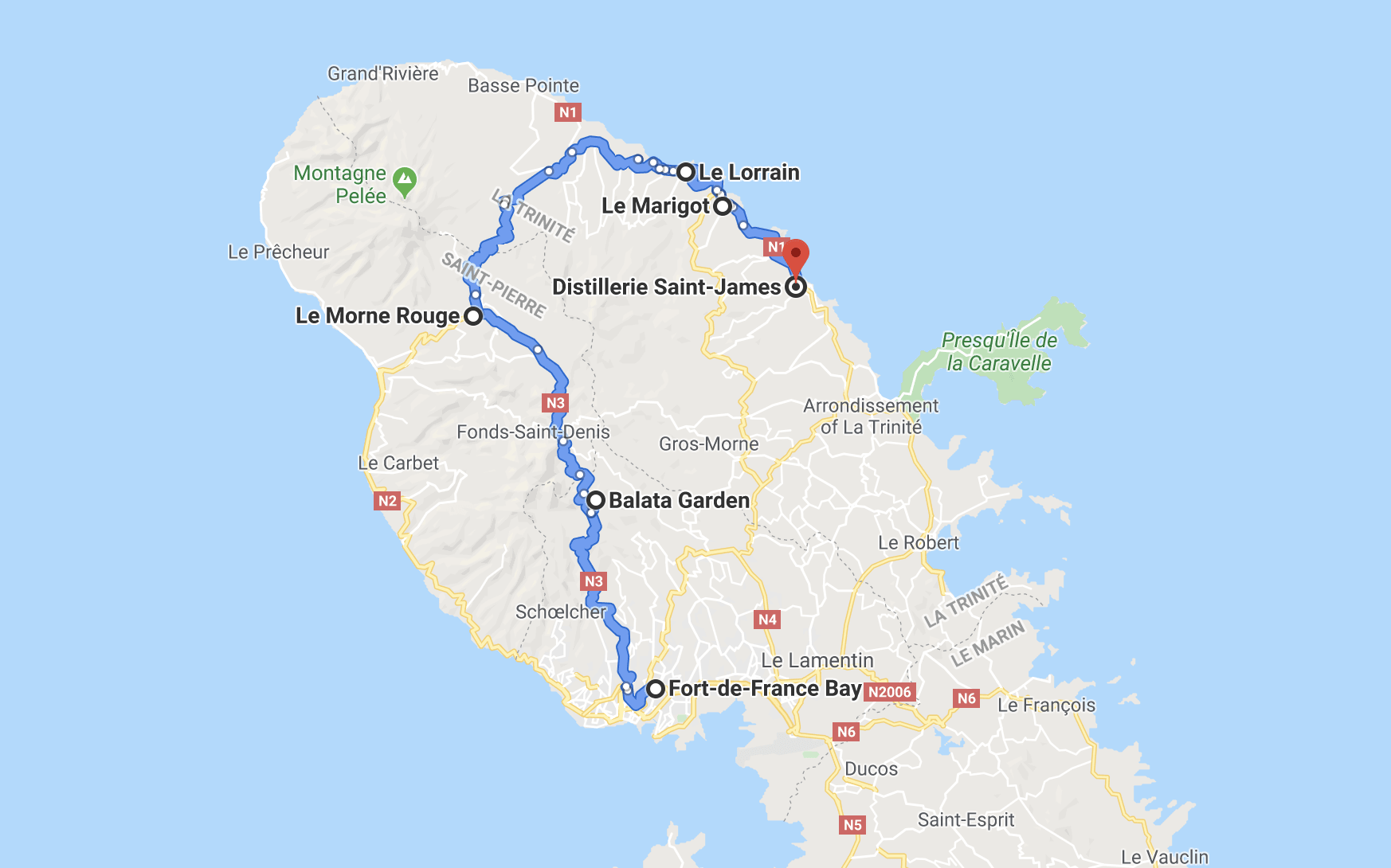
Our previous road trip had been such a success, exploring palm fringed beaches on Martinique’s Southern Coastline, that we decided to rent another car any try again. This time, we were to cut through the centre of the island visiting Jardin de Balata, then making our way down across the Atlantic coast of Martinique towards Saint-Marie and the Saint-James Rum Distillery.
Le Morne Rouge is a beautiful part of the island to explore as you head up into Northern Martinique, but also a historic home to the immense disaster of Saint-pierre, where the entire town was destroyed in 1902 by the volcanic eruption of Mount Pelée. Before the devastationg eruption, Saint-Pierre was the cultural capital of Martinique, known as “the Paris of the Caribbean”.
Nowadays, you can instead still see evidence of the disaster & historic remains, and visit the Volcanological Museum (Musée vulcanologique Franck Perret).
Le Lorrain & Le Marigot
As you head around the bend towards the Atlantic coast of Martinique the scenery transforms into sweeping hillsides of banana plantations overlooking the ocean.
This part of the island reminded me a lot of my visit to Kauai, Hawaii and was a whole new side of Martinique our previous road trip didn’t show.
I highly recommend the restaurant Le Point de Vue for excellent Caribbean food and ocean views, I would gladly pass another day here.
Northern Martinique Road Trip Details
From: Fort-de-france To: Sainte-Marie, Martinique
Stopped in at: Jardin de Balata (Fort-de-france), Le Morne Rouge (Sainte-Pierre) Le Lorrain, Le Marigot, Distillerie Saint-James (Saint-Marie)
Clear waters, soft golden sand, scorching summer afternoons slipping lazily into long, dreamy evenings – the Albanian riviera paints a beautiful backdrop for enjoying the delights of the coastline without the crowds and price tag of Italy and France.
Once you figure out the endlessly changing location of the Tirana bus station, it’s fairly simple to make your way down to the sea. It’s also reachable from nearby Greece – both by land or by way of a quick and cheerful ferry ride over from Corfu to Sarandë.
Go, you must go my friends told me when I was living in Greece. We were all volunteers, living amidst an overwhelming humanitarian crisis with so much heart but very little cash. Many had travelled down Europe this direction, passing through the Balkans on their journey down to help out there.
Everyone raved about Albania. Underrated, affordable, kind and welcoming they claimed. It’s not a country I’d thought a lot about, but the recommendations echoed in my mind.
A while later, long after I’d left Greece with my heart in pieces I would make my way back to Europe, but this time it came at the tail end of an overland train journey across Asia, one spanning many months and ending in Ulaanbaatar, where, oddly enough I was able to get my hands on plane tickets from Ulaanbaatar to Tirana, Albania.
All of those encouraging words danced back into my memories as I planned a new adventure after Asia, one where I would catch busses across the Balkans. It would all begin in Albania, this country I’d heard so much of and knew so little about.
Sarandë – Lounging about, gazing out to the Ionion sea
Where is the Albanian Riviera?
Affectionately nicknamed Bregu, the Albanian riveria stretches across Sarandë and Vlorë in the Southwestern coastal region of Albania. In simpler terms, it’s in the lower corner tucked up against the Greek border & the nearby Greek island of Corfu, and with the toe of Italy just across the water.
This region of Albania is pretty accessible – you could catch the bus from Tirana , a ferry from Corfu(a very nearby Greek Island) a ferry from Brindisi(a much further away port of Italy), or busses from some of the bigger cities in neighbouring countries such as Skopje (North Macedonia)
Cute aquamarine breakfast spot on a Ksamil beachSunset dinner enjoying the sunset over Ksamil
Titirangi is one of my favourite corners of the world, certainly my pick for undiscovered North Island towns. It’s underrated, under-explored, and truly magical. Technically this is a suburb, rather than its own town, but as soon as you arrive you instantly feel a million miles away.
Tucked away in the Southern entrance to the Wait?kere Ranges, to the West of Auckland; Titirangi means either long streaks of cloud in the sky or fringe of heaven in M?ori, depending on how you interpret it. Either way, the land’s ancestors knew a special place when they found it. Fringed with swaths of deep, green, native New Zealand bush; instead of traffic, the soundtrack is bellbirds, tuis and gently lapping waves. This is a far, far, cry from the Auckland most people imagine.
I lived in Titirangi for a few years, a number of years ago. It’s made a lasting imprint, and one of my favourite things is the character of the village; Think organic farmers markets, charming café culture & small, locally owned eateries. Titirangi is a haven for creatives, and is home to many artists, musicians, galleries, and theatre – for a long time my favourite Auckland suburb (err, let’s go with village) upheld a reputation as a bohemian hub.
Titirangi is the undiscovered jewel in Auckland’s crown, and I’m always eager to recommend it to any visitors I hear badmouthing Auckland city!
2. | Waikanae
Recommended by Jub at Chur New Zealand
Having grown up in Waikanae, I’ve come to appreciate my visits to see family. What used to be a town people would rarely visit as a tourist, is now an increasingly popular day trip destination from Wellington.
There are plenty of amazing walks in Waikanae with options for everyone. And being located on the west coast, the sunsets are amazing, even more so in the winter when the sun dips behind Kapiti Island.
Head to the beach in the evening for a stroll, and enjoy the sunset before heading to one of the restaurants near the beach.
This brings us to the food and drink scene in Waikanae. It has moved on from fish and chips being the only options. There’s Los Locos, The Front Room, and the Long Room Cafe, all near the beachfront. And grab one of the amazing pies from Olde Beach Bakery n the morning!
At the village, there’s the health-oriented Sunday Cantina and the Salt and Wood Collective serving locally brewed craft beer. Two of my favourites
Want more ideas you can include in your visit to Waikanae?
Visit Nga Manu Nature Reserve
Take a birding tour around the estuary
Swim in Waikanae River
Browse Mahara Gallery
Play 18 holes at Waikanae Golf Course
In my early 20’s I would’ve said that Waikanae is boring. 10+ years later, and I’ve grown to appreciate how great Waikanae is for a small town in NZ. The food options are better than ever, the trails are well maintained, and who doesn’t love a town close to both the beach and mountains (the Tararua’s aren’t far away).
3. | Waitomo King Country
Waitomo is a tiny little rural village which normally packs a massive tourism punch. Before pandemic times, the tiny town of Waitomo near the center of the North Island was a constant stream of tour busses thanks to the magnificent Waitomo Glowworm caves. At the time of publishing this (March 20201) New Zealand is still mostly shut off from tourism, and the delightful town of Waitomo is struggling!
It’s a place well worth the visit – nestled amongst lush rolling countryside, dotted with sheep (or adorable little lambs, if you visit in the spring) and full of gorgeous forest trails, walkways, glowworm grottos, waterfalls and a sprinkling of delightful eateries.
What to do in Waitomo?
HuHu Cafe is excellent, I would eat there again (and again, and again)
Make sure to explore the nearby Ruakuri Bushwalk, for an hour-long loop trail of bridges, caves, glow-worms, and waterfalls.
Go Zip Lining at the Waitomo Caves Zipline Park
Discover the Opapaka P? Walk for some bird watching
Go blackwater rafting through caves of twinkling glowworms
4. | Matakana Auckland
Recommended byCaroline at CK Travels
Picturesque Matakana Village is one of the best day trips from Auckland and located just 40 minutes north of the city.
Matakana Village itself is quite small and has a handful of pubs, art and craft galleries and an arthouse cinema. Most people head here though to visit the weekend Matakana Village Farmers Market, located next to the river. The market is a foodies paradise and sells a wide array of delicious local organic produce and street food including amazing oyster platters andfresh paua fritters.
The town is also known for its award-winning vineyards and there is a Matakana Wine Trail where you can visit 15 different boutique wineries set amongst the rolling hills. Many of them have cellar doors where you can enjoy wine tasting, and some have stylish restaurants where you eat a gourmet lunch with a beautiful view of the vines (Plume Winery has a lovely outdoor dining area). You can also join a small group tour to take you to some of these wineries.
The nearby coast is also very popular and has pretty white sandy beaches where you can surf, snorkel, dive, swim, kayak or paddleboard, and nearby there are many scenic walking and cycling tracks.
Home to one of New Zealand’s most beloved beaches, Ohope is a small, almost single road settlement east of Whakatane in the North Island. It’s an excellent place to escape in nature, partake in water sports such as surfing or windsurfing, go hiking, or spot wildlife in their natural habitat.
Life here is in the slow lane, and it’s especially great for an easy family holiday. Rent a holiday home and spend your days building sandcastles, swimming, and playing ball games on the large sandy beach. There are also two great playgrounds situated on the grassy banks next door, where children will be entertained for hours. Adult visitors can browse the small selection of boutiques, and enjoy a leisurely brunch at the popular Moxi cafe. If you’re up for a more strenuous adventure, hit the trails in the Ohope Scenic Reserve, or the Kohi Point Scenic Reserve – both will afford you unbeatable views over the small town, coastal area, and both Whale and White Island off in the distance.
Ohope is one of those places that wins you over with its relaxed way of life, and you’ll want to keep on returning for years to come!
Rawene
Recommended by Roxanne of Faraway Worlds
Travelling along the rugged coastline of the west coast of Northland, I was pleasantly enchanted by scenic Hokianga, with its ancient forest and wild beaches. We had passed other towns along the way, but Rawene was a surprise – a jewel in a jagged landscape. First settled in the early 19th century, Rawene is New Zealand’s third oldest European settlement. Set on the water, the small town has a number of colourful, historic buildings, art galleries and craft shops, which are slightly incongruous with its surroundings.
It’s a quiet spot – Hokianga doesn’t get anywhere near the number of visitors of the east coast – but that just adds to its calm. Take a leisurely walk through the village, gaze out over the water, and stop for lunch in a local café. While you’re there, be sure to take a peek in Clendon House. Built in the 1860s, it was the home of an early New Zealand trader and is beautifully preserved.
Then catch the ferry to Kohukohu, the largest town in Hokianga, and the isolated north. Kohukohu is worth a visit, but it can’t compete with beautiful Rawene, with its quirky storefronts, interesting murals and historic buildings. However, it’s the streets and people of Rawene that will catch and keep your attention, unassuming but somehow managing to embody the wild and beautiful spirit of the Hokianga region.
Kerikeri
Recommended by Cassie of Cassiethehag.com
Kerikeri is a small town in the Northland area of New Zealand and is famous for its important history and natural attractions. Located in the subline coastal region appropriately named ‘the Bay of Islands’, it makes an attractive stop for road trippers, though I visited as a Summer weekend away from Auckland.
Once home to Maori chief Hongi Hika, you can still visit his old settlement, which was strategically located along the Kerikeri River, which is now also popular for local hikes. New Zealand’s second mission station (which now remains here as New Zealand’s oldest building) is in the heart of the town. These buildings are the Stone Store and Kent House, which you can still visit today.
From these buildings, a walk to Rainbow Falls is a must-do in my opinion. But one of the best things to do in Kerikeri is visiting the wonderful nearby Northland beaches. Matauri Bay and Tauranga Bay are amazing beach stops for Summer, and the drive from Kerikeri has stunning elevated views too. For families, you may also enjoy visiting the Bay of Islands Vintage Railway.
Finally, don’t miss a visit to the Waitangi Treaty Grounds in nearby Paihia – this is where the Treaty of Waitangi was first signed, thus forming New Zealand as we know it today.
Hahei
Recommended by Trisha and Modi from Try Wandering More
Hahei is a small beachside village located in the Coromandel Peninsula in New Zealand’s North Island, just a 2.5-hour drive from Auckland. We chose to stay here only because of its proximity to popular attractions. We didn’t expect much from the village before we got here. However, we were happily surprised by this charming settlement which has only two restaurants, a brewery, an ice cream cum pizza parlour, a general store, a gift shop, a gas station, and some holiday-related businesses.
Hahei’s low population combined with immense greenery lends to the serenity of the village. Yet, Hahei has a happy vibe with its colourful flowers, chirping birds and nosy seagulls. The beach too is a beautiful white-sand one with calm waters – perfect for a relaxing swim. Our time at the village was made even more memorable by our lovely B&B and friendly hosts.
That being said, Hahei is not just about the village but also about the incredible vistas around the area. It has spectacular seaside walks to the famous Cathedral Cove and to Te Pare Point. One can swim, snorkel, boat, kayak, fish and dive to explore the Te Whanganui-A-Hei marine reserve here. Hot water beach, near Hahei, is a fascinating one, where you can dig your own spa pool at low tide.
We would love to return for the delicious food, the relaxing walks, the picturesque sceneries and the many things to do that we missed.
Waiheke
Recommended by Angie from Where Angie Wanders
Waiheke, a quick ferry ride across the water from Auckland, is one of the most beautiful islands in all of New Zealand. This tiny island with only 10,000 residents, is a popular day-trip destination for both Aucklanders and tourists to the North Island, thanks to the 30-plus boutique wineries that are scattered around its countryside. I headed to the island to experience wine tasting in Waiheke’s vineyards and loved every minute of my trip.
From the wine and the food to the beautiful settings of the wineries it was perfect from start to finish. In the daytime the views from Waiheke island across the Hauraki Gulf are sensational, and in the evening as the sun sets, you feel like you are in a magical place – especially if you happen to have a glass of New Zealand sauvignon blanc in your hand.
But it’s not just wine that attracts visitors to Waiheke. Other activities include ziplining across the vineyards to cycling around the island with stops for wine tasting on route! Walkers are also catered for with several hiking trails stretching across the countryside. Waiheke also has some fantastic sandy beaches, my favourite being Oneroa lined with indigenous pohutukawa trees perfect for offering shade on hot summer days.
I was born and raised on the South Island of New Zealand, but it took me until my adult life of traveling the world to come to appreciate how beautiful and unique this island really is. But the more I travelled, the more I heard from people along my way how much they dreamed of visiting New Zealand. My curiousity was always piqued – where would you like to go? The answers were always similar; Queenstown usually came up, or perhaps they’d heard of Auckland, or wanted to visit the Hobbiton set.
But what about the small towns? I thought.
Well, it turns out that most people haven’t heard of the charming small towns smattered throughout the South Island, and in the spirit of #backyourbackyard I reached out to some fellow travellers & travel bloggers to ask them what was their favourite small town to visit in New Zealand. Combined with some of my own personal favourites, here’s some of the South Island’s most gorgeous little towns.
1. | Lyttelton Canterbury
A personal recommendation of mine
Lyttelton is a tiny portside town on the outskirts of Christchurch, which thanks to the handy Lyttelton tunnel is only a 10 minute drive into the bigger city, yet feels a million miles away. The town is magical and life revolves arounds a steady buzz of the ports, a main street full of charming stores and a bustling weekly farmers market.
This town is special to me for a number of reasons, and it remains so undiscovered by most tourists. This is where my grandmother lived whilst I was growing up, and then many years later when we ended up back in New Zealand by surprise (thanks 2020 pandemic!) this is where we took a six month rental, and enjoyed the small town little life over the autumn and winter.
It’s worth a visit if you like seaside life, lovely little streets lined with wooden villas & english country style gardens, a strong sense of community atmosphere and some trendy bar, restaurants and cafes. The Sunday farmers market is a highlight of the week too – it would make a great day trip from Christchurch.
Arrowtown is a leafy town nestled between hills on the banks of the Arrowtown River, 13 miles from its famous neighbour Queenstown. If Queenstown is too busy or expensive for you, then quieter, cheaper Arrowtown is a great base for exploring this region. Originally a farming area, Arrowtown transformed into a mining town after gold was discovered here in the 1860’s.
Today, Arrowtown’s historic main street retains a 19th century feel with wooden shop fronts and vintage telephone boxes. Charmingly quaint miners’ cottages are dotted around the town, many of which are available for holiday lets. Don’t miss the small but excellent Lakes District Museum in the town centre. This award-winning museum is packed with mining memorabilia and charts the history of the area. For a few dollars, museum visitors can hire gold panning equipment and head to the tree lined banks of the Arrowtown River (which featured in The Lord of the Rings movies) to pan for gold.
We initially decided to stay in Arrowtown in order to visit Queenstown but ended up spending most of our week exploring the friendly laidback town and enjoying peaceful hikes in the beautiful locality.
3. | Akaroa Banks Penninsula
Recommended by Delphine at LesterLost
On the South Island of New Zealand, the Banks Peninsula is a great day trip from Christchurch. Akaroa is the main township on this volcanic outpost and a charming little town. The Banks Peninsula is only an hour away from Christchurch and a paradise of rolling hills and scenic roads… Few people know this, but Akaroa has a strong connection to France, which may sound strange since New Zealand was colonised by the British… But indeed, the township of Akaroa was first settled by French whalers in 1840.
The British convinced the French to leave after only ten years by buying them out… And yet, over 150 years later, the French influence is still visible. The cemetery, some street names and overtly French cafes and restaurants maintain the flame of a distant and short-lived settlement… I discovered Akaroa by accident on my honeymoon to New Zealand and I keep going back, not just because of its French history, but the scenic summit road, colourful houses and unique volcanic harbour make the Banks Peninsula one of my favourite destinations in New Zealand. If you are keen on wildlife experiences, Akaroa also has a number of eco tours and cruises where you can observe seals and dolphins.
3. | Glenorchy Otago
Recommended byMargarita Steinhardt at The Wildlife Diaries
Glenorchy is a beautiful little settlement surrounded by the towering snow-capped mountains, glacial lakes and ancient beech forests, 46 kilometres north of Queenstown on New Zealand’s South Island. The drive from Queenstown to Glenorchy along the shore of Lake Wakatipu is one of the most scenic drives in New Zealand, which is very high praise considering that virtually every road in New Zealand is a scenic drive.
The town of Glenorchy is very laid-back. There are a couple of pubs, a cafe, a general store and the iconic red boatshed on the lakeshore. One of the best things to do in town is to explore Glenorchy Walkway that meanders through the wetlands of Glenorchy Lagoon. On a clear day, you can see the reflection of Mt Earnshaw reflected in the still waters of the lagoon.
And if you are looking for adventure, you can explore the Tolkienesque landscape around Glenorchy on horseback or on foot, in a 4×4 or in a jetboat, from a helicopter or from a mountain bike. And don’t be surprised if the landscape looks oddly familiar, the area around Glenorchy served as a filming location for Isengard, Lothlorien and Amon Hen in the Lord of the Rings movies.
4. | Kaikoura Canterbury
Recommended by Mikaela of Voyageur Tripper
Kaikoura is often overlooked by tourists to New Zealand, but it’s such a charming little seaside town that really shouldn’t be missed. I grew quite fond of this town after I spent a few months on the South Island between the delicious food joints, affordable places to stay, and outdoor activities.
Honestly, I had one of the best experiences of my life here when I got to swim with wild dolphins! I would go back just to see the dolphins again. You’re given a wet suit and a snorkel then you hop on a boat in search for the gorgeous animals.
Once you find them you hop in the water and they swim right up to you. They are super playful animals and will even “talk” to you if you start making noises at them!
The most popular activity in Kaikoura is whale watching though. You can do this either by boat or helicopter and with both you only have a 5% chance of not seeing a whale. The boat option is cheaper than the helicopter but on the helicopter, you also see beautiful views of the peninsula.There are so many fun things to do in Kaikoura and great opportunities to view wildlife. I’ll be planning a return trip as soon as I can!
5. | Twizel Mackenzie District
Recommended by Chris of Aquarius Traveller
At some point, when you’re driving around the South Island of New Zealand or looking at visiting Mount Cook, you will pass by the small town of Twizel. With a population of 1500, it’s the largest town in the Mackenzie region, on the other hand, numbers can triple during the tourist season. This is your number one gateway town for Mount Cook National Park and some of the best Mountain views on the South Island.
There is nothing like waking up every morning to a backdrop of the Southern Alps, or wandering through the friendly town at several cafes and eateries. Have some fun fishing for salmon or trout from the canals that run through the town, or take the easy way out and visit the local Salmon farm for the local delicacies. It’s all of this and Mount Cook, that keeps me coming back time and time again.
A range of accommodation options are available from Hotels, Motels, Cottages, Bed and Breakfasts, and Airbnb’s. Whatever your situation, there is going to be something to suit your style and budget.
Mount Cook National Park is less than an hour away, and there is are so many ways to experience this part of the South Island. Seeking adventure on one of the many hiking trails like Hooker Valley Track or Tasman Lake. Fly like a bird above the snow-topped mountains, or kayaking on one of the many rivers.
Twizel is known for its low light pollution and dark skies, which means it’s the best place to stargaze and see the wondrous Milky Way. Don’t forget to check this out on your visit!
5. | Te Anau Southland
Recommended by Nicholas of Rambling Feet
My main reason for visiting Te Anau was to enjoy a shorter drive to Milford Sound. However, I found plenty to make it worth staying a couple of nights or more. Being on the shores of Lake Te Anau, it comes with some stunning waterside views of the mountains. It’s a town that is incredibly close to nature such that it’s the gateway to Fiordland. From the surrounding area, trampers start three of the Great Walks of New Zealand: the Kepler, Milford and Routeburn tracks. Head 30 minutes south to Manapouri and you’ll be at the start of the cruise to the quieter but more dramatic Doubtful Sound. There are even scenic flights if you prefer to see the Eighth Wonder of the World from above.
You’d expect a lot of traffic, given how much there is to do. However, most of it is transient, so the town still feels unhurried during even the day. You can take a cruise or kayak around the lake, and there are tours that take groups into the caves to see thousands of glow worms light up the darkness. If you’re even less adventurous, there’s still a leisurely stroll along the lakeshore to the Te Anau Bird Sanctuary, where you can see native feathered critters, some of which are endangered. You can even get close to the takahe, a flightless bird that was thought extinct only 100 years ago, during their feeding times.
6. | Oamaru South Canterbury
Recommended by Lotte from Phenomenal Globe Travel Blog
Just short of 14.000 residents, Oamaru is one of the ‘larger’ villages on the South Island, though it’s still far from a big city. Despite its modest size, Oamaru has plenty to offer for visitors and should be included on any New Zealand road trip itinerary.
Oamaru likes to call itself Steampunk HQ. Steampunk is a quirky genre of science fiction that features steam-powered technology from the 19th century. When strolling through the city center you’ll undoubtedly come across many funky steampunk machines and art, resembling anything from human faces to a weird (and slightly scary looking) locomotive. There are even a Steampunk Museum (open 7 days a week from 10.00 am – 4.00pm) and a Steampunk Playground, so plenty to keep the kids occupied for a couple of hours.
There is more to Oamaru than steampunk though, one of the other highlights is the large blue penguin colony that calls Oamaru home. Well, not the streets of Oamaru obviously, but you can spot these cute little guys waddling around the beach from a special day viewing area. Keep in mind the Blue Penguin Colony is a protected habitat and be sure to follow the guidelines as not to disturb these wonderful creatures.
Back in the center of Oamaru you’ll notice plenty of charming old buildings in the Victorian Precinct, most of these warehouses have been converted into galleries and boutique stores. Don’t forget to check out the pretty railway station and the imposing Bank of New South Wales building.
7. | Franz Josef West Coast
Recommended by Jon from See the South Island
Franz Josef is a tiny glacier town on the West Coast of New Zealand’s South Island. The main draw is obviously the glacier, which you can see on a large number of hikes or from a helicopter, but the town itself is about as quaint and picturesque as you’ll find in New Zealand. The town, home to around 500 people, is surrounded by lush green hills and snow-capped mountains, and you’ll see some amazing views by just walking the quiet streets. There are plenty of bars, cafes and restaurants with outdoor seating areas, and there are even some hot pools – perfect after a long day of hiking.
To see the best views of Franz Josef Glacier I’d recommend doing the Alex Knob Track. It takes 6-8 hours and takes you high above the glacier-carved valley. If you’re keen for something a little easier you can see the glacier from one of several short tracks, including Sentinel Rock and Peters Pool. Weather is key to these tracks – you’ll be blown away if you see this area on a nice day, but you won’t see much if it’s cloudy!
8. | Wanaka Otago
Recommended by Karen of Big Adventures for Little Feet
When visiting the South Island of New Zealand the majority of tourists flock to Queenstown however we found nearby Wanaka to be the stunning, relaxed mountain escape that we were seeking. Nestled next to picturesque Lake Wanakaand only an hour from Queenstown airport this resort destination is the perfect place to visit for a short or longer stay.
Known for its adventure sports, Wanaka is brimming with outdoor activities both in winter and summer. Snowsports dominate the winter scene but if summer adventures are more your thing this is the place to be for breathtaking hikes, water sports and a plethora of other activities.
We loved strolling the foreshore of Lake Wanaka, relaxing in the small village shops and cafes and simply taking in the views of the surrounding mountains from the hot tub at our accommodation. I highly recommend a couple of days exploring Mount Aspiring National Park which can be done by utilising Wanaka as your base. The Mount Aspiring National Park is such a pristine and untouched National Park allowing you to drive through the mountain range before opening up on the expansive Haast Pass. Make sure you stop for all the short hikes and waterfalls along the way with some favourites being the Blue Pools walk and the Fantail Falls.
9. | Cromwell Southland
Recommended by Bailey from My Queenstown Diary
The Otago region in New Zealand is a busy place to visit. Tourists fill the roads traveling between the small but very touristic towns of Queenstown, Glenorchy, and Wanaka. However, one town often forgotten is Cromwell. This quaint town sits on the shores of Lake Dunstan and is surrounded by vineyards, cherry trees, and even mountains. It’s a beautiful place to visit where visitors can enjoy a quieter time surrounded by beauty.
There are a ton of awesome things to do in Cromwell but few are as iconic as taking a trip to some of the local wineries. What’s unique about wine touring through Cromwell is you can actually do it on foot. Via the 4 Barrels Wine Trail, which leads you through some of the best and brightest wineries in Cromwell, you can explore without the worry of driving.
Another activity that’s a favorite of mine is to simply have a BBQ on the shores of Lake Dunstan. Around the lake, you’ll find BBQ’s dotted around the shoreline. Go into town and grab some food before heading town for one relaxing afternoon and maybe even a swim!
Despite Cromwell remaining off the beaten path, it’s one of the cutest towns in New Zealand that everyone should add to their bucket list!
10. | Punakaiki West Coast
Recommended by Daniel from Destinationless Travel
If you take a drive up the stunning West Coast of New Zealand’s South Island you’ll pass by many beautiful towns along the way. One that stands out and a place I love to visit is the quaint town of Punakaiki. Made up of only a few streets, this small town packs quite the punch when it comes to breathtaking landscapes. The entire town is surrounded by lush forest and the coastline on which it sits is not only rugged, but filled with wildlife.
Of the many amazing things to do in Punakaiki, visiting the famous Pancake Rocks is one of the best. On a huge boardwalk, you’ll explore the rock formation that got its name because it actually looks like stacked pancakes. It’s the reason most stop here, but unfortunately for them, they never seem to stay. For those that do though, you can enjoy much more including hiking the Truman track and kayaking down the Pororari River. One of New Zealand’s 10 Great Walks starts nearby too, the Paparo Track!
In a town so small there isn’t much else to do other than explore the area, but that’s what makes it such a bucket-list town to visit! If you are hungry though, and after a fun night out, head to the Punakaiki Tavern for a look inside a classic New Zealand country pub.
It was my 59th day travelling solo in India, so far my entire trip had been by train. I’d started out in New Delhi, and traversed around Rajasthan before finally making my way up to Rishikesh to stop awhile. With only one day remaining on my Indian tourist visa, it was time for me to make a swift exit up and out to Nepal.
So far, I’d loved the thrill of buying standby tickets. I enjoyed the exhilaration of laying in the hard, sleeper class bunks as the chaiwallahs passed by, and the night air streamed in through the non-air conditioned carriages.
Armed with apps, plans and a ton of research, I’d become adept at knowing which trains I would have a chance to ride on, without needing to book weeks (or months) in advance. This last ride would be no different – Haridwar in the Northern region of Uttarakhand, skimming across the Southern border of Nepal to Gorakhpur, a 17 hour train journey where I could then connect onto a relatively painless bus up and across the border into Nepal. From there, I would slowly work my way up to Kathmandu.
When good plans go wrong, time to head to Delhi
But this last ride would be the one that fell to tatters. Unbeknownst to me, it was an important holiday in the region and I would not get on any of the standby trains to Gorakhpur. After a full day of sitting in the muggy, open air Haridwar station missing train after train, admiring the magnificent Ganges, it was time to admit defeat, engage the backup plan and catch a bus to New Delhi instead. After an exhausting day, and heeding the urgent warnings of safety for the part of the city I was in after dark, I scrambled to find a quick bite before sunset. Slipping down into a street side restaurant, I accepted a plate of the curry special of the day. It was only a few bites in when the foul flavours intensified – like rotting drainwater, emanating from a chicken thigh swimming in curry not strong enough to disguise the stench. Immediately I put the plate aside, paid the bill and made for my hotel room.
But it was too late, the damage had been done. The wheels were now in motion for a horrendous case of food poisoning, or Delhi Belly as it’s far too affectionately called.
I was up at the crack of dawn, flying past the stinking trash piles and backed up, smoggy motorways of New Delhi in the back of a flaming fast and bounding tuktuk en route to meet my bus. It was not a bus station, nor even a bus stop to be honest. Just a rickety old bus, parked under a big bridge, in who-knows-where Delhi. But, there was a bus at least, and one I had a ticket for at that. Horrendously unprepared, with a single water bottle and no snacks, I took my seat on a cracked vinyl seat for the 25 hour bus trip I’d barely had time to plan for, one that a good friend of mine had taken just days before and sent dire warnings of windy roads and a long, upright journey.
The bus was full of Indian and Nepalese passengers, making their way between the two neighbouring countries. Behind me sat two Israeli girls, the only other foreigners on this journey.
Crawling out of Delhi, bound for the Bhimdatta border crossing
After a long while the sprawling neighbourhoods and slums of Delhi faded into rural villages and small farms, oxen roamed the roads and smiling men peddled cigarettes, candy, and tea through the open windows of waiting cars and busses. My stomach began to churn, innocently at first. Perhaps I hadn’t had enough breakfast, or maybe I was a touch carsick. I tried all the distraction techniques I could think of – napping, meditating, breathing, and finally just ignoring it and watching a show on my iPad. The sickness lingered, but didn’t seem to intensify.
As I was settling in to nap, the girl behind me fell ill to motion sickness from the windy, bumpy roads. Hearing the sounds of her vomiting did little to instil hope in me for my own digestive system state, and I tried to block the sounds out and focus on relaxation.
We lurched forward into our 1144 Kilometer journey, heading out to the East through the state of Uttar Pradesh, then up into Uttarakhand. We drove through stretches of jungle just before the border that I was later to learn exist as a hub of exciting wildlife – full of leopards, elephants, bears, tigers, monkeys, and snakes.
We’d been on the road many hours at this point, but the journey was just beginning. It was time to stop at Banbasa, on the border where Bhimdatta in the Western end of Nepal meets Uttrakhand in the Northern parts of India. If I’d made smarter choices, this is where I would’ve spent the night. I was also later to learn I could’ve caught a bus here directly from Haridwar where this all started, rather than backtrack my way around Northern India to Delhi. But, alas, we live and learn and don’t always find the best options in the heat of the moment.
I’m still to this day unclear why I made the choice to travel direct to Kathmandu. I think the distance felt like a grand journey, rather than a poorly planned misadventure.
Allow me to introduce you to my chariot. Sorry for the blur, it’s the best pic I’ve got!
The Banbasa Canal Range and Immigration Office
Banbasa is where we would stop the bus to make our border crossing into Nepal, through the Immigration India office placed quite incredibly overtop of the Banbasa Canal Range, no less. It’s one of the popular border crossing spots, thanks to having both Indian and Nepalese immigration offices on either side of the magnificent canals.
Nepalese and Indian nationals may cross at this border unrestricted, but for third country nationals such as myself, there is a customs checkpoint on either side. To make matters more interesting, the two offices were separated by large bridges that the busses were not allowed to carry passengers over. So we were let out of the bus, and asked to walk.
Not that I minded, of course. I was feeling quesy and stretching my legs & getting some fresh air felt excellent. The busload of passengers had a long wait time, as myself and the other two foreigners had to go through our own private immigration process in small offices on each side of the border.
Lions, Tigers, Bears, Oh My!
By the time we reached Nepal to catch up with our bus, my stomach was growling. I erred on the side of cautious optimism and assumed it was hunger, and stopped at a roadside stall for a hot bag of samosas to munch on. Our bus pulled out into the Western corner of Nepal, snaking through gorgeous little villages and around the edges of the Shuklaphanta Wildlife Reserve and Bengal Tiger Conservation Unit. The samosas were not easing my stomach, but I was thrilled and delighted to spy signs on the wild roadsides asking drivers to drive respectfully and not disrupt the tigers.
As the winding hills and altitude increased, so did my nausea. In an instant, I was vomiting into a plastic shopping bag I had nearby, nursing a warm back of sick on my lap. Everything went downhill from there (except the bus, of course – that carried on relentlessly through the snaking, hilly, Himalayan foothills of Western Nepal, whether I liked it or not)
I tied the bag up as tightly as I could, but not before managing to spill oh-so-much of its contents over my now disgustingly sticky lap. I was in cold sweats, slick with rapidly cooling sick and still heaving out the window I’d opened, much to the disdain of the other passengers as the air conditioning and fans wouldn’t work if a window was opened even a crack. Or so the incensed bus driver informed me.
From Bad to Worse, with 15 hours to go.
In no uncertain terms I let everyone know I would need to continue vomiting out of the window, unless somebody had a suitable vessel for me to procure. Which they didn’t, of course, so off we went – no air conditioning, and a continuous streak of pulverised samosas building a racing stripe down the outside of the bus.
And this is how thing went for many hours. I could not hold water down, and I was becoming more and more aware I may need a hospital. But more than that, I was terrified of getting off the bus and finding myself in a small, remote village without access to healthcare. With over 15 hours left in the trip, the only reasonable option seemed to me to wait it out until the end, and seek some respite and a doctor in Kathmandu.
The remainder of the journey passes in a blurry montage. I’m fevery and sticky, the girls behind my seat have taken a keen interest in making sure I’m okay, and trying to ply me with travel sickness pills and electrolytes from their travel medicine kits.
As it turns out, life is beautiful
Eventually we stopped. I have no idea where it was, or what time it was in this point. But it’s the most poignant memory from the Nepal leg of the trip.
It was time for dinner, and as usual, the bus driver had a pre-arranged rest stop for us to grab a bite, use the rest rooms and take a break from the road. This was my chance – a bathroom! A private space to change my pants to something clean! A wash basin! All my dreams of that night come true. I didn’t dare eat nor drink, save for a sip of a cold sprite I’d bought just in case it would stay down. But I relished the opportunity to clean up, get some air, and return to the bus a new person.
One of the girls turned to me, ‘you’re lucky you have vomiting food poisoning – can you imagine if it was coming out the other end like this instead?‘ I laughed, and laughed, possibly deliriously at this point. But she was so right, what a silver lining that was!
Right as expected the sickly taste of sprite found its way up to my throat, and I stumbled over to a large tree beside the bus where I could be sick in peace. As I was sitting there, hand on the tree bark, hunched over vomiting, I saw a small cloud of flickering fireflies – the first I’d ever seen. I was in absolute awe at despite seeing it through the veil of fevery haze, just how beautiful this incredible country was, and how kind the people I’d met along my way were.
I finally arrived into Kathmandu
Somehow we did eventually make it to Kathmandu. As the trip progressed, I managed to get more fever-dreamed sleep in and the time passed more quickly. The girls had decided I needed a hospital, and being the excellent and well prepared travellers they were, they already knew of one I should go to that came highly recommended by their books and insurance documents.
I spent a few days recuperating, resting, and getting tests taken at the CIWEC Hospital and Travel Medicine Centre where I was incredibly well taken care of. My Insurance company (World Nomads) really came through for me, and the staff at the hospital were beyond amazing. For all my fears of finding myself without adequate healthcare were unfounded in this case, and I was able to leave for my hostel just a few days later after they ruled out the nasties like malaria, and decided it was indeed a severe case of food poisoning, something they see often in travellers arriving from New Delhi.
Initially, I stayed at Kasthamandap Travellers Home which I also whole heartedly recommend. Not just because their rooftop views are amazing, but also because they learned I’d been sick in hospital, so upgraded my room from a large dorm to just a 2 bed room, where I mostly was on my own. When I did require company, they made sure to bunk me up with a kind and quiet lady who was wonderful company. In the first few days they had people come check on me to make sure I was eating, and in general they went above and beyond to care for me and make my stay as lovely as possible while I recovered from the ordeal.
All in all, I got very lucky. My trip was filled with disasters, yes. But also beautiful places, moments of intense gratitude and I experienced the enormous kindness of so many strangers.
Despite the year being utterly bizarre, it seems to be over about as quickly as it began! It’s hard to imagine a year ago I was in Martinique, planning for a North American Christmas visit then onto Tokyo for New Years!
It’s not been the 2020 we wanted, but it’s the 2020 we’ve got – and although it’s been challenging, there’s been a lot of good too. This is what I’d like to focus on, all the good bits that managed to slip through the cracks of a chaotic and strange year.
I’ve been so thankful to spend a year back home with my family, rediscovering my fabulous home country and living a much less transitory existence than I am normally used to. Buying a car, renting an apartment, having a small garden – none of these were on the forecast for this year, yet I am enjoying the change of pace that comes with these things.
This blog has been on a bit of a hiatus – so much so, in fact, that I didn’t post a November update. That’s because life got real busy all of a sudden with university exams, relocating up to Auckland, and my first attempt at celebrating US thanksgiving!
But things haven’t been entirely static, you may notice a new design on the site that I’ve been working away on migrating to, and a new photo blog section to contain more short-form and image based updates, as well as a brand new newsletter design & content! So stay tuned, as things around here are gearing up for more travel writing and updates as we plough on ahead into a new year!